
Plant for pollinators
Pollinator gardens & Lawns to Legumes
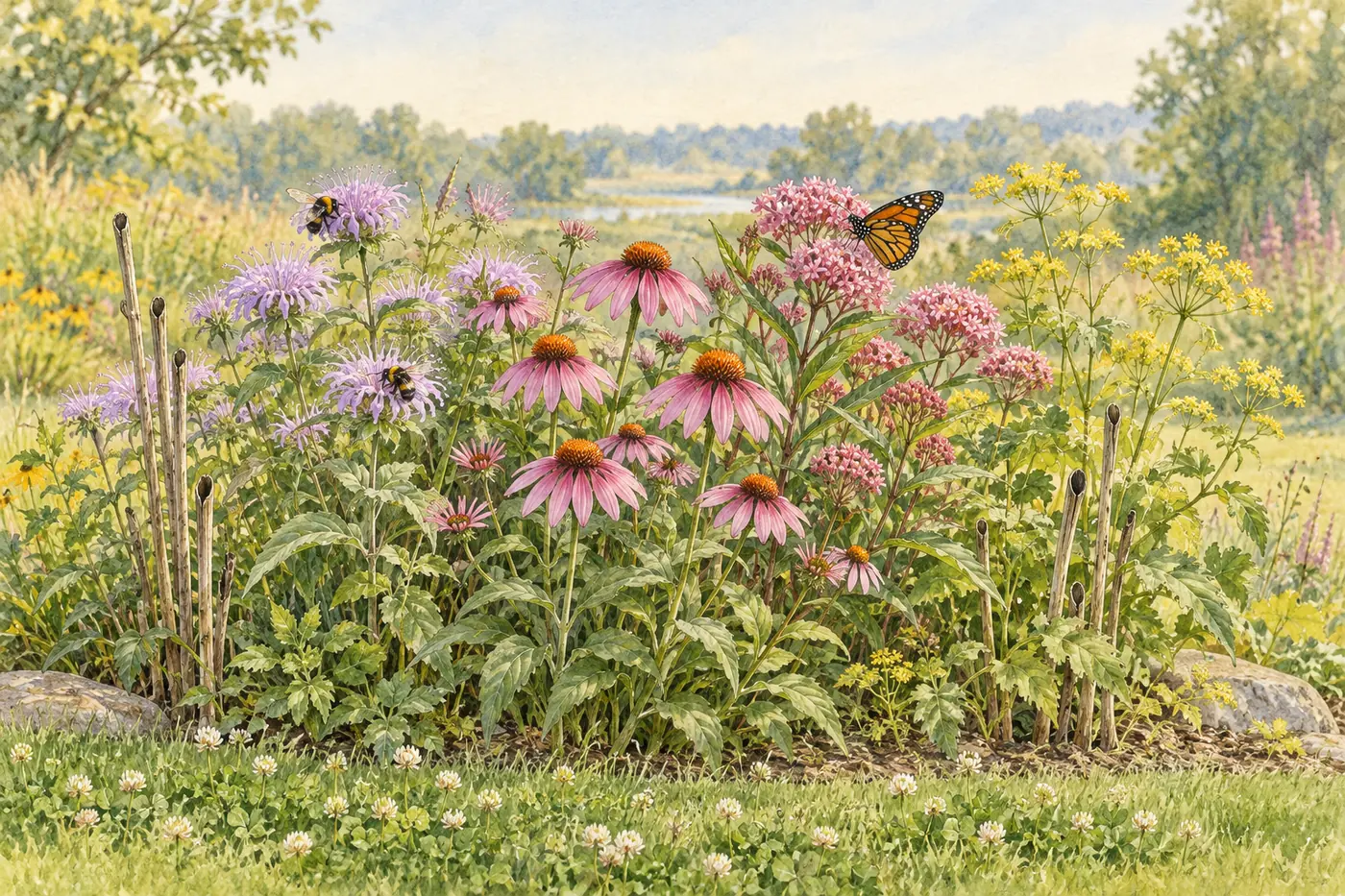
Plant a mix of mostly native flowers so something blooms from April to October, group them in clumps, skip insecticides, and leave stems and leaves standing over winter for nesting bees. Minnesota’s Lawns to Legumes program can reimburse up to $400 of the cost.
Applications for spring 2027 Lawns to Legumes grants are open now, with recipients chosen by weighted lottery and notified in January 2027. Grants reimburse up to $400 of what you spend on a pollinator planting after you’re awarded. Owners and renters can apply, and container plantings count.
Bees, butterflies and moths need two things from a garden: flowers from spring to fall, and somewhere to nest. You don’t need acres — a sunny bed, a corner of the lawn, even a few big containers make a difference.
Plan for blooms from April to October
The Minnesota Board of Water and Soil Resources (BWSR) recommends continuous bloom from April through October, with natives at the core. Here’s a season-by-season lineup from plants we grow:
| Season | Natives we grow | Other pollinator favorites |
|---|---|---|
| SpringApril–June | Natives we growGolden Alexanders, foxglove beardtongue, woodland phlox | Other pollinator favoritesBaptisia, lupine, ornamental onion |
| Early summerJune–July | Natives we growButterfly weed, common milkweed, wild bergamot | Other pollinator favoritesCatmint, yarrow, coreopsis, coneflower |
| Late summerJuly–September | Natives we growSwamp milkweed, Joe Pye weed, mountain mint, yellow coneflower, ironweed, great blue lobelia | Other pollinator favoritesBlazing star, bee balm, black-eyed Susan |
| FallSeptember–October | Natives we growShowy goldenrod, little bluestem (for nesting and cover) | Other pollinator favoritesAsters, sedum |
Browse everything we mark as a pollinator plant on the plant list, or just the Minnesota natives.
Give bees a place to live
- Leave the stems. Many native bees nest in hollow stems. Leave last year’s stems standing through spring, or cut them to about 12–18 inches and let new growth hide them.
- Leave some bare ground. About 80% of bee species nest in the ground, so a few sunny, unmulched patches help.
- Leave the leaves. Fallen leaves shelter overwintering insects. Rake them off the lawn and onto the beds (see fall leaves).
- Skip insecticides and fungicides on anything that blooms. Pollinator habitat should be spray-free; our chemical-free pest control guide has alternatives.
Lawns to Legumes, explained
Lawns to Legumes is a BWSR program that offers workshops, coaching, planting guides and individual grants for turning part of a residential yard into pollinator habitat. Blue Thumb and Metro Blooms help run it. A few things worth knowing before you apply:
- It reimburses after the fact. Grants pay back up to $400 of approved costs, and only purchases made after you’re awarded count. A limited number of vouchers exist for people who can’t pay up front.
- It’s a lottery. Recipients are chosen by weighted lottery, with extra weight for priority areas for the rusty patched bumble bee — Minnesota’s state bee, listed as endangered in 2017 and still seen in the Twin Cities.
- Four kinds of projects qualify: native pocket plantings, pollinator-friendly trees and shrubs, pollinator lawns, and pollinator meadows. Native plants must come from within 175 miles.
- Signups open in rounds. Check Blue Thumb for the current round. Anoka Conservation District also runs a local pollinator cost-share program at times.
Thinking about a bee lawn?
A bee lawn mixes low flowers into a fine-fescue lawn so it blooms between mowings. University of Minnesota Extension recommends Dutch white clover and self-heal (UMN found 56 bee species on white clover alone); it no longer recommends creeping thyme for bee lawn mixes. The best time to seed is early November to mid-December (dormant seeding), or mid-May to early June. Mow at 3 inches or higher every two to three weeks, and skip a mowing when it’s in full bloom. UMN’s bee lawn guide has seeding rates.
Common questions
What is Lawns to Legumes?
A Minnesota Board of Water and Soil Resources (BWSR) program that helps residents turn part of their yard into pollinator habitat, with workshops, planting guides and individual grants that reimburse up to $400. Blue Thumb and Metro Blooms help run it. Signups open in rounds, so check Blue Thumb for the current one.
What should I plant for pollinators in Minnesota?
A mix of mostly native flowers chosen so something is blooming from April to October: golden Alexanders and penstemon in spring, milkweeds, bee balm and coneflowers in summer, blazing star, Joe Pye weed and mountain mint in late summer, and goldenrod and asters in fall. Plant each kind in a clump rather than one of everything.
Should I cut back my garden in fall for pollinators?
No — leave stems and leaves standing over winter. Many native bees nest in hollow stems, and about 80% of bee species nest in the ground. In spring, cut old stems back to about 12–18 inches (no shorter than 5 inches) and leave them; new growth hides them in a few weeks.