
Garden projects
How to build a rain garden in Minnesota
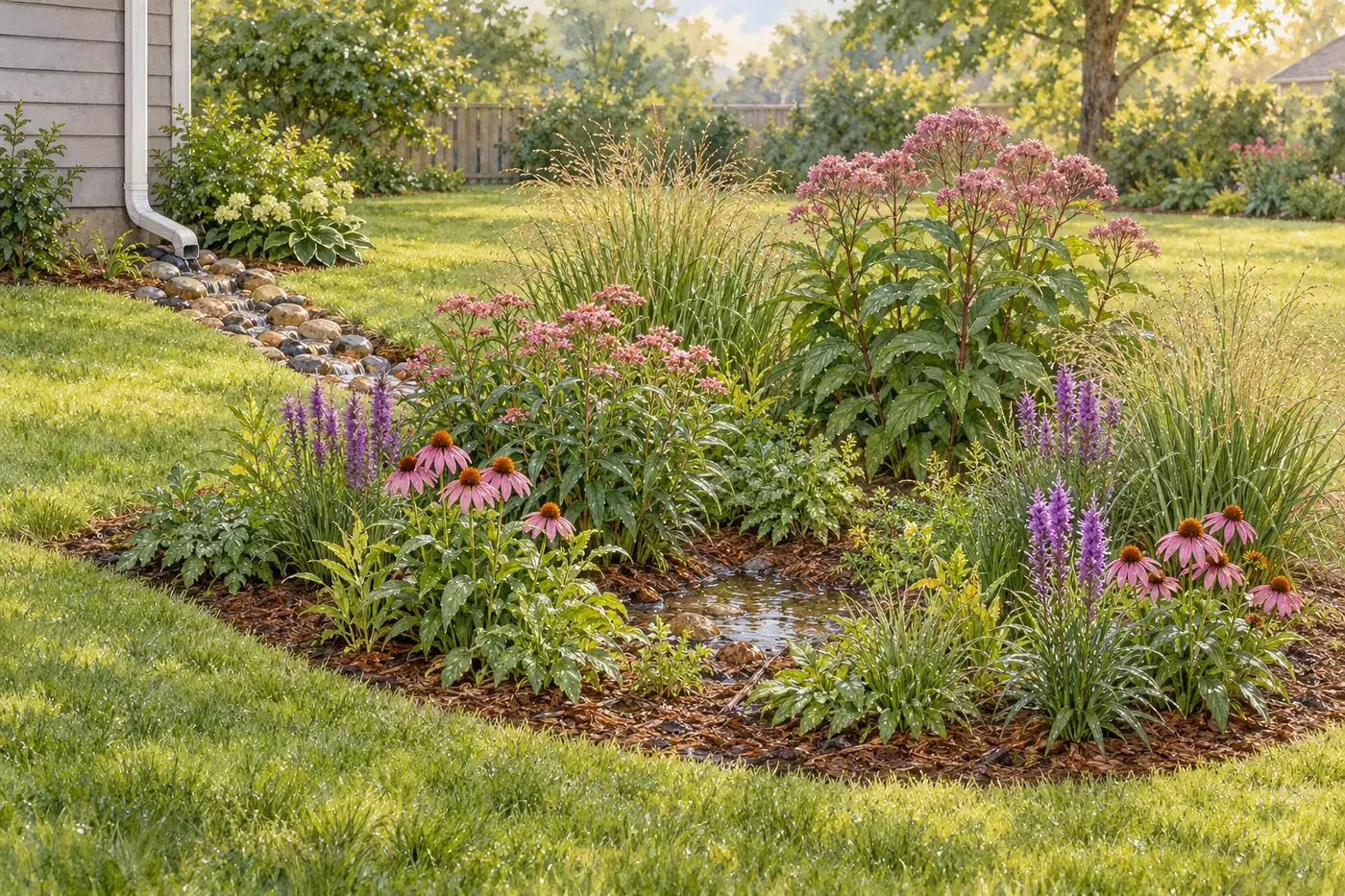
A rain garden is a shallow, level-bottomed dip, usually 100 to 300 square feet and 4 to 10 inches deep, that catches runoff from a roof or driveway and soaks it into the ground within 48 hours. Put it at least 10 feet from the house and 35 feet from a septic drain field, size it at about a third of the hard surface draining into it, and plant it with natives that can handle both wet feet and dry spells.
Every roof, driveway and patio sends rainwater rushing to the street, where it picks up sediment, fertilizer and lawn clippings on the way to the nearest lake. A rain garden slows that water down and lets the soil filter it. It’s also one of the best-looking ways to fix a soggy corner or a downspout that washes out the mulch.
Pick the spot
Walk your yard during a hard rain and watch where the water goes. The best spot is on the path the water already takes, downhill from a downspout or the end of a driveway — but not a low spot where puddles sit for days, which tells you the soil isn’t draining.
| Keep it | Distance | Why |
|---|---|---|
| From buildings | Distance10 ft or more | WhyKeeps water away from foundations and basements |
| From a septic drain field | Distance35 ft or more | WhyThe drain field needs dry soil to work |
| From a drinking-water well | Distance20 ft minimum (state rule); 150 ft if you use fertilizer or pesticides | WhyProtects your drinking water |
| Off utility lines | DistanceCall 811 first | WhyGopher State One Call marks them for free |
Distances from University of Minnesota Extension and Minnesota Rule 4725.4450.
Build it, step by step
- Do a percolation test. Dig a hole 10 inches deep, fill it with water, and check it. If it’s empty within 48 hours, the spot works. If not, try somewhere else.
- Size it. A rain garden handles runoff from a hard surface about three times its own size. If 600 square feet of roof drains to one downspout, plan about 200 square feet of garden. Most home rain gardens land between 100 and 300 square feet.
- Call 811. Contact Gopher State One Call at least 48 hours before you dig, not counting weekends and holidays. Mark the area with white stakes or paint. It’s free.
- Dig a shallow, level bowl. Go 4 to 10 inches deep and keep the bottom level so water spreads out instead of pooling at one end. On sandy north-metro soil, 3 to 6 inches is plenty.
- Build a berm. On a slope, pile the soil you dug out along the downhill side to hold the water in.
- Plant in three zones. Wet-tolerant plants in the bottom, plants that handle wet-then-dry on the sides, and drought-tolerant plants on the edges. Every plant in a rain garden should handle standing water for up to 48 hours.
- Mulch and water. Spread 2 to 3 inches of shredded hardwood mulch, which stays put better than chips when water flows in. Water about an inch a week for the first couple of years, until roots are established.
What to plant where
| Zone | Conditions | Good choices | What we grow |
|---|---|---|---|
| Bottomthe wettest part | ConditionsPonds briefly after a storm | Good choicesBottlebrush, fringed and tussock sedges, blue flag iris, soft rush, arrowhead | What we growTurtlehead, boneset |
| Sidesthe slopes | ConditionsWet, then dry | Good choicesSwamp milkweed, New England aster, Joe-Pye weed, cardinal flower, great blue lobelia, blue vervain, switchgrass, red-osier dogwood, black chokeberry | What we growSwamp milkweed, Joe Pye weed, great blue lobelia, switchgrass, blazing star |
| Edgesthe rim and berm | ConditionsDriest | Good choicesAnise hyssop, purple coneflower, butterfly weed, prairie onion, big and little bluestem, wild bergamot, black-eyed Susan; prairie smoke as a border | What we growConeflower, butterfly weed, little bluestem, wild bergamot, black-eyed Susan |
Plant lists from University of Minnesota Extension; prairie smoke from the Minnesota Board of Water and Soil Resources.
Keeping it working
Once it’s established, a rain garden needs less care than lawn. Weed through the first couple of seasons, keep the mulch 2 to 3 inches deep, and clear leaves and sediment out of the inlet so water can get in. Each spring, cut last year’s dead stems down to a few inches above the soil. Leave them standing through winter — they shelter insects and hold snow.
East Bethel is in the Upper Rum River and Sunrise River watershed management organizations. Before you buy plants, ask your watershed organization, your city or the Anoka Conservation District whether they offer cost-share or design help for rain gardens.
Rain garden plants we grow
Common questions
How far from the house should a rain garden be?
At least 10 feet from any building, and 35 feet or more from a septic drain field. Minnesota requires at least 20 feet between a well and drainage features, and University of Minnesota Extension suggests 150 feet if you’ll use fertilizer or pesticides nearby.
How deep should a rain garden be?
Usually 4 to 10 inches, with a level bottom so water spreads out evenly. On fast-draining sandy soil, a shallower 3 to 6 inches is enough.
Will a rain garden breed mosquitoes?
Not if it’s working. A rain garden should drain within 48 hours, which is faster than mosquitoes need to develop. If water sits longer than that, the spot or the soil is wrong — do a percolation test before you dig.
Do I need to call before digging a rain garden?
Yes. Call Gopher State One Call at 811, or file online, at least 48 hours ahead, not counting weekends and holidays. It’s free, and they’ll mark buried utility lines before you dig.