
Planning for color
Perennial bloom times: color from May to frost
Updated October 2026
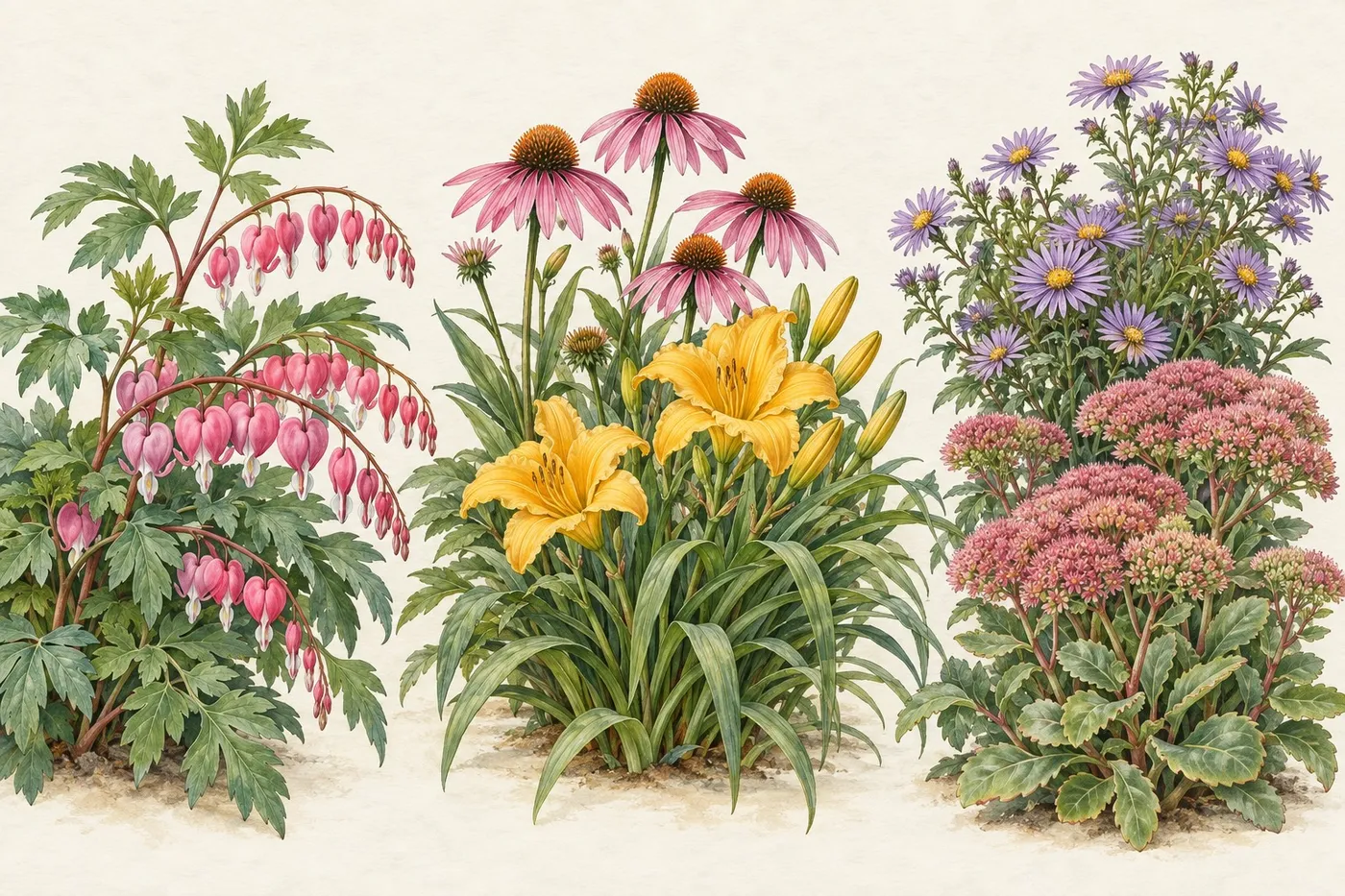
For color from May to frost, plant from all four bloom windows: spring (bleeding heart, brunnera, creeping phlox, columbine), early summer (peonies, baptisia, lupine), midsummer (coneflower, bee balm, daylily, blazing star, black-eyed Susan) and late season (sedum, goldenrod, Joe Pye weed, asters). Anchor the bed with long bloomers like catmint, Russian sage, coreopsis and gaillardia.
The most common perennial regret we hear is some version of "my garden looks amazing in June and boring by August." That's not bad luck — it's a scheduling problem, and it's completely fixable. Here's when the perennials on our benches actually bloom.
Try it with your own garden
Planting perennials? Try the Garden Time Machine.
Pick what you love, slide from May to October, and see which months could use more color — with suggestions from what we grow.
How to use this
Pick at least two things from each column — spring, early summer, midsummer, and late season — and you'll never have a dead month. The classic Minnesota mistake is buying everything in May, when the garden center is full of things blooming right now: you go home with peonies, columbine, and bleeding heart, and by August you own a very nice green rectangle.
The four shifts
Spring (May–early June): primrose, creeping phlox, bleeding heart, brunnera, columbine, candytuft — the wake-up crew, mostly short but precious.
Early summer (June): peonies, poppies, baptisia, lupine, delphinium. Big, showy, and brief — plant them where something later can fill in around them.
Midsummer (July–August): the workhorses. Coneflower, bee balm, daylily, phlox, yarrow, coreopsis, blazing star, black-eyed Susan. Most of these run for weeks, and several rebloom if you shear them after the first flush.
Late season (September–frost): the closers, and the ones people forget to buy: Autumn Joy sedum, goldenrod, Joe Pye weed, ironweed, monkshood, fall anemone. These carry the garden to frost and feed the last pollinators of the year.
The long-haul plants
A few earn their spot by simply refusing to quit: catmint (shear it once and it goes May to September), scabiosa, coreopsis, gaillardia, and Russian sage. If you're building a bed from scratch, start with these as the backbone and layer the seasonal stars around them.
One for every bloom window
Common questions
What perennials bloom all summer?
Catmint is the champion: shear it once after the first flush and it blooms from late May into September. Russian sage, coreopsis, gaillardia and scabiosa also run for months. Build a bed around these and add the seasonal stars.
What perennials bloom in the fall in Minnesota?
Autumn Joy-type sedum, goldenrod, Joe Pye weed, ironweed, monkshood and fall anemone, plus asters and hardy mums. They carry the garden to frost and feed the last pollinators of the year.
What are the first perennials to bloom in spring?
Primrose, lungwort, creeping phlox, bleeding heart, brunnera and leopard’s bane (doronicum) open from late April into May, followed by columbine and candytuft.
When do peonies bloom in Minnesota?
Usually early to mid-June in the north metro, a little earlier after a warm spring. Each plant blooms for about a week to ten days, so mixing early and late varieties stretches the show.
How do I make perennials bloom longer?
Deadhead or shear after the first flush. Catmint, perennial salvia, coreopsis, veronica and shasta daisies all rebloom when cut back. Then choose plants from every bloom window in the chart above so something is always coming on.
Why didn’t my perennial bloom this year?
The usual reasons: it’s still young (many perennials spend their first year growing roots), it’s getting too much shade, it was fed too much nitrogen, the clump is overcrowded and needs dividing, or, for peonies, it was planted too deep. Peony eyes should sit no more than about two inches below the soil (more in why won’t my peony bloom?).
When should I plant perennials?
Spring or early fall. Spring through June gives the longest runway, and September through mid-October works well too. See when to plant perennials in Minnesota.