
Minnesota & Seasons
Fall leaves: rake them, mulch them, or leave them?
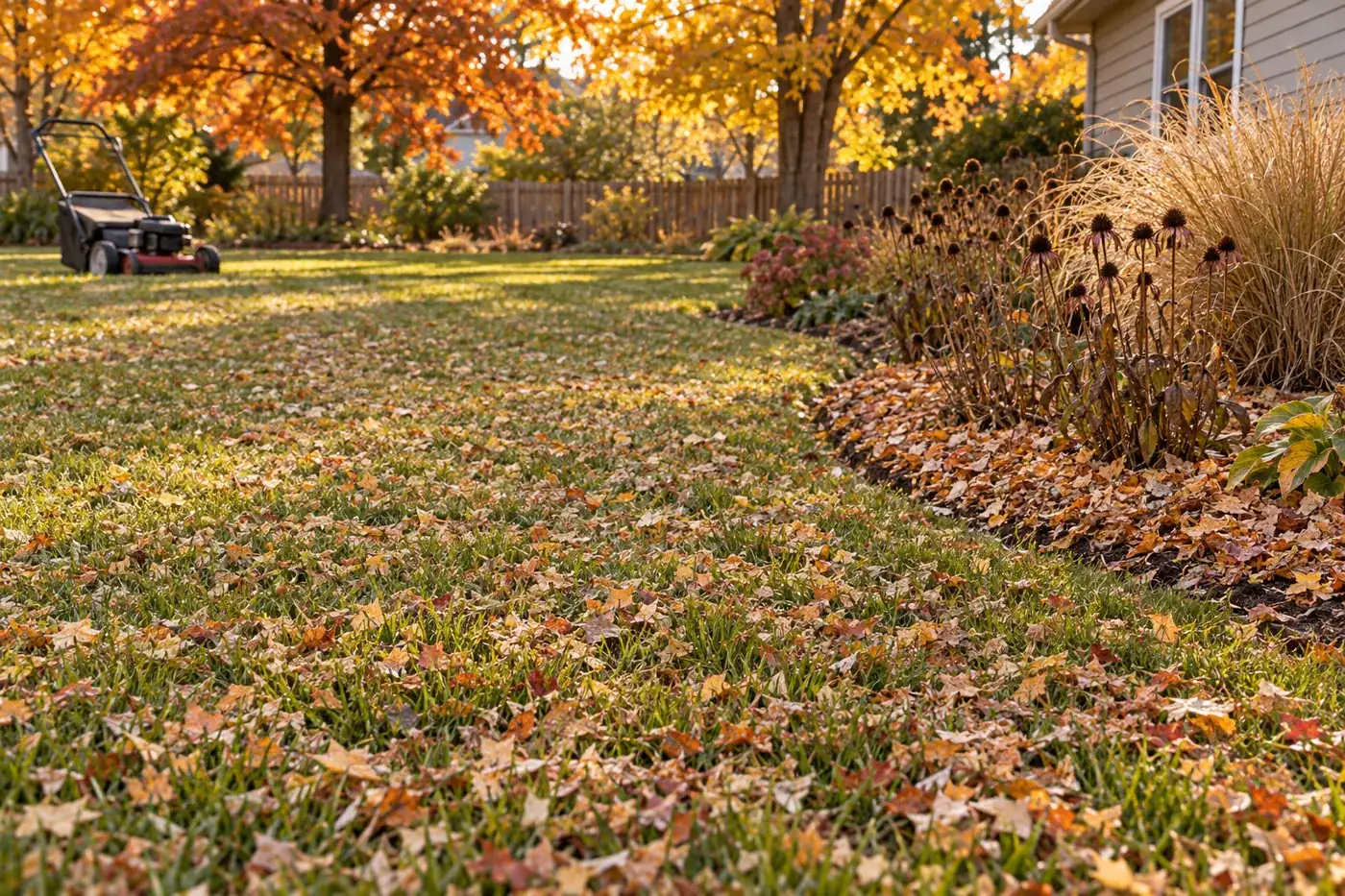
Keep most of your leaves in your own yard: mow them into the lawn until you can see the grass through them, leave a layer in the garden beds (shredded over small perennials), compost the extras, and keep them out of the street, where they wash into storm drains and feed algae in our lakes.
On the lawn: mow them in
You don't need to rake the lawn. Run over the leaves with a mower a couple of times, with the bag off or a mulching blade on, and they'll shred into flakes small enough to settle down between the grass blades. Worms and soil microbes take care of them over winter, and they add organic matter to the soil.
The test is simple: after mowing, you should be able to see the grass through the chopped leaves. If it's still a solid layer, mow again or rake some of it into the beds. What you want to avoid is a thick mat of whole leaves sitting on the lawn all winter. That smothers the grass and invites snow mold, the gray or pink matted patches you find in April.
In the garden beds: leave them
- Around shrubs and under trees, whole leaves can just stay where they fall, a few inches deep.
- Around perennials, shred them first (the mower works for this too). Whole maple leaves can mat down over small crowns like heuchera and creeping phlox and hold water against them.
- They're winter housing. Bumblebee queens, many butterflies and moths, fireflies and the beetles that eat garden pests spend the winter in leaf litter. A spotless yard in November is a quiet yard in July.
- They're slow fertilizer. By midsummer most of the layer has broken down into the soil.
Compost the extras
Leaves are the “brown” half of a good compost pile. Mix them with grass clippings and kitchen scraps and they'll be finished compost by next summer, faster if you shred them first. Leave out leaves from plants that had disease, such as apple scab or tar spot; those go in yard waste.
Keep them out of the street
This is the one rule worth taking seriously in Minnesota. Leaves blown or raked into the gutter wash into storm drains, which run straight to our lakes and rivers. As they break down they release phosphorus, which feeds the algae blooms that turn lakes green in August. If you've got more leaves than your yard can use, take them to your city or county yard-waste drop-off.
The one-line version
Mow them into the lawn until you can see the grass, shred some over the beds, compost the rest, and keep every one of them out of the street.
Common questions
Is it OK to leave leaves on the lawn over winter?
Not in a thick layer. A solid mat of whole leaves smothers the grass and encourages snow mold. But you don't have to rake them: mowing them a few times with a mulching mower chops them small enough to fall down into the grass, where they break down and feed the lawn. If you can see the grass through the chopped leaves afterward, you're fine.
Should I leave leaves in my garden beds?
Yes, in most beds. A layer of leaves around perennials and shrubs insulates the soil, breaks down into organic matter, and shelters overwintering insects such as bumblebee queens, butterflies and fireflies. Shred them first if they're going right over the crowns of small perennials, because whole wet leaves can mat down.
What should I do with extra leaves?
Compost them: leaves are the “brown” half of a good pile. Bag a few bags of shredded leaves to use as winter mulch over fall-planted perennials. Anything beyond that goes to your city or county yard-waste drop-off, never the street.
Can I compost diseased leaves?
Leave out leaves from plants that had disease, such as apple scab or tar spot. Those go in yard waste instead.