
Pests & Critters
Chemical-free pest control that works
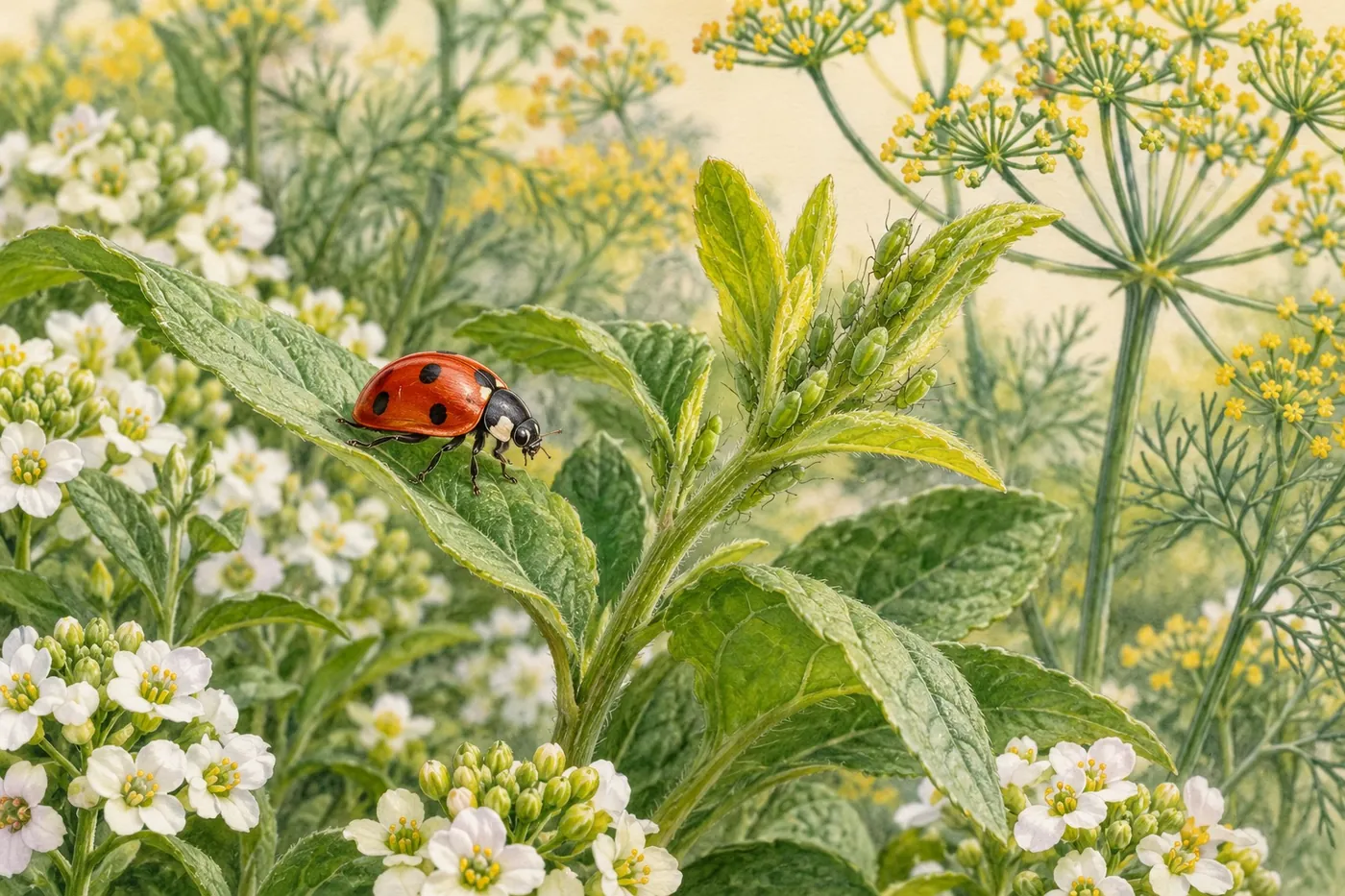
The short answer: most garden pests can be handled with water, your hands, and a few low-impact products, as long as you catch them early. We grow everything at Goldeman's without synthetic pesticides, and the same habits work in a backyard: look at your plants often, act early, and leave room for the good bugs that eat the bad ones.
Start with the habits
- Look under the leaves once a week. Most pests start small and hide there.
- Grow healthy plants. Stressed plants (too dry, too crowded, overfed with nitrogen) get hit hardest. Soft, lush growth from heavy feeding is aphid candy.
- Invite the predators. Ladybugs, lacewings, parasitic wasps and birds eat pests for free. Flowers like yarrow, alyssum and dill feed them, and broad-spectrum sprays kill them.
Aphids
Clusters of small green, black or pink insects on new growth and flower buds. Knock them off with a hard spray of water every couple of days; most can't climb back. For heavy infestations, use insecticidal soap, which works on contact and has to hit the aphids directly. Once ladybugs show up, stop spraying and let them work.
Japanese beetles
Metallic green and copper beetles that skeletonize roses, grapes, lindens and more from late June into August. Hand-pick them in the early morning, when they're sluggish: hold a cup of soapy water under the leaf and tap them in. Skip the pheromone bag traps. Research shows they attract more beetles into your yard than they catch.
Slugs
Ragged holes in hosta leaves and slime trails in the morning. Water in the morning rather than the evening so the ground is drier at night, and clear away boards and soggy debris where they hide. Set out shallow dishes of beer sunk to the rim, or lay down a board and scrape off the slugs underneath each morning. Iron phosphate slug bait is approved for organic gardening and safe around pets.
Spider mites
Fine speckling on leaves, and fine webbing in bad cases, usually in hot, dry weather. They hate humidity: rinse the undersides of the leaves every few days. Insecticidal soap helps. On houseplants, a shower in the tub does the same thing.
Cabbage worms
Green caterpillars from the little white butterflies you see over the vegetable garden. Cover cabbage, broccoli and kale with floating row cover right after planting so the butterflies can't lay eggs. If worms show up anyway, hand-pick them or use Bt (Bacillus thuringiensis), a natural bacterium that only affects caterpillars.
A word on "natural" sprays
Look for products labeled OMRI Listed, which means they're approved for organic growing. Even then, spray only the plants that need it, only when needed, and never on open flowers while bees are working. Neem oil and horticultural oils can burn leaves in heat over about 85°F, so spray those in the evening.
↑ Back to all guides