
Minnesota soil
Gardening in sandy soil
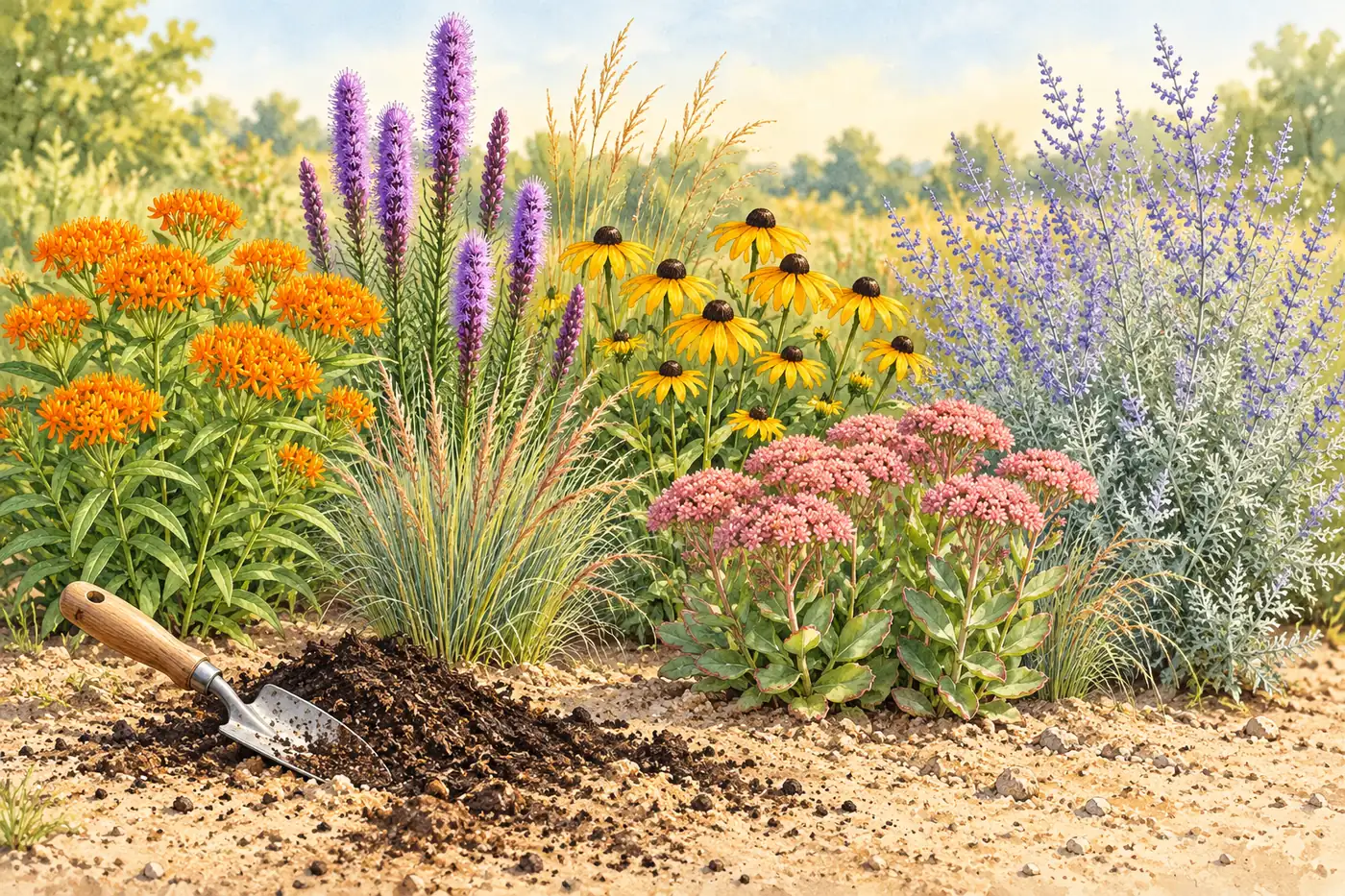
Much of East Bethel and Anoka County sits on the Anoka Sand Plain, where most of the soil is fast-draining sand. Water and nutrients run straight through it. Work in compost, keep 2–3 inches of mulch on top, water deeply instead of in daily sprinkles, feed in smaller doses, and lean on plants that like it dry: butterfly weed, little bluestem, blazing star, black-eyed Susan, yarrow, sedum, Russian sage and catmint.
If your garden soil runs through your fingers like a beach, you’re not doing anything wrong — that’s the north metro. According to the Minnesota DNR, 70–80% of the soils on the Anoka Sand Plain are excessively well-drained sands, and before the houses arrived they grew oak savanna and dry prairie. Sand has real upsides: it never turns to mud, it warms up early in spring, and the right plants thrive in it with almost no help.
What sandy soil means for your plants
| Sand does this | So you | Why |
|---|---|---|
| Drains fast | So youWater deeply, early in the morning | WhyA quick sprinkle never reaches the roots |
| Holds few nutrients | So youFeed smaller amounts, more often | WhyUMN: sand is “not a good nitrogen savings account” |
| Dries out at the surface | So youKeep 2–3 inches of mulch on top | WhyMulch slows evaporation and adds organic matter as it breaks down |
| Warms early in spring | So youPlant cool-season crops as soon as it’s workable | WhySeeds can go a little deeper than in clay |
Build it up with compost — within reason
Compost is the best thing you can add to sand: it helps it hold both water and nutrients. University of Minnesota Extension suggests working 1–2 inches of compost 6–8 inches deep into flower and vegetable beds, and about 4 inches, 12 inches deep, before planting trees and shrubs. Then top it off every year with mulch.
One caution: UMN researchers found that gardens loaded with compost year after year built up far more phosphorus than plants need. A soil test every few years tells you when to ease off. (Our soil & mulch calculator will tell you how many bags a bed needs.)
Watering sandy soil
Most plants want about an inch of water a week, from rain plus watering. How you deliver it depends on the plant:
- New plantings, vegetables and containers: split the inch into two or three waterings a week. Their roots are shallow, and sand dries out fast.
- Established perennials, grasses and shrubs: one deep soak a week in dry spells. Watering less often but more deeply drives roots down, where the soil stays moist.
- Always: water in the early morning, at the soil rather than the leaves. On a well? Our well water guide covers hard water and iron.
Plants that thrive in sand
Start with the ones that grew here before the houses — Minnesota’s dry prairie natives — and add a few tough garden favorites. All of these are on our benches:
For annuals in hot, sandy spots, look at portulaca, gazania, zinnias and lantana. For more perennials, see our guide to drought-tolerant perennials for sandy soil.
Common questions
What grows well in sandy soil in Minnesota?
Plants from Minnesota’s dry prairies and oak savannas love it: butterfly weed, little bluestem, blazing star, black-eyed Susan, yarrow and coreopsis, plus tough non-natives like sedum, Russian sage and catmint. In the vegetable garden, carrots, potatoes and melons do well in sand because it warms up early.
How often should I water sandy soil?
Aim for about an inch of water a week in total. Sandy soil holds less at a time, so new plantings, vegetables and containers may need that inch split into two or three waterings. Established perennials, grasses and shrubs do better with one deep soak a week in dry spells, which pushes their roots down.
How do I improve sandy soil?
Work 1–2 inches of compost 6–8 inches deep into flower and vegetable beds (about 4 inches, 12 inches deep, before planting trees and shrubs), then keep 2–3 inches of mulch on top. Feed in smaller, more frequent doses, because sand doesn’t hold nitrogen, and get a soil test now and then so you don’t overdo the compost.