
Know your perennials
Ornamental grasses for Minnesota
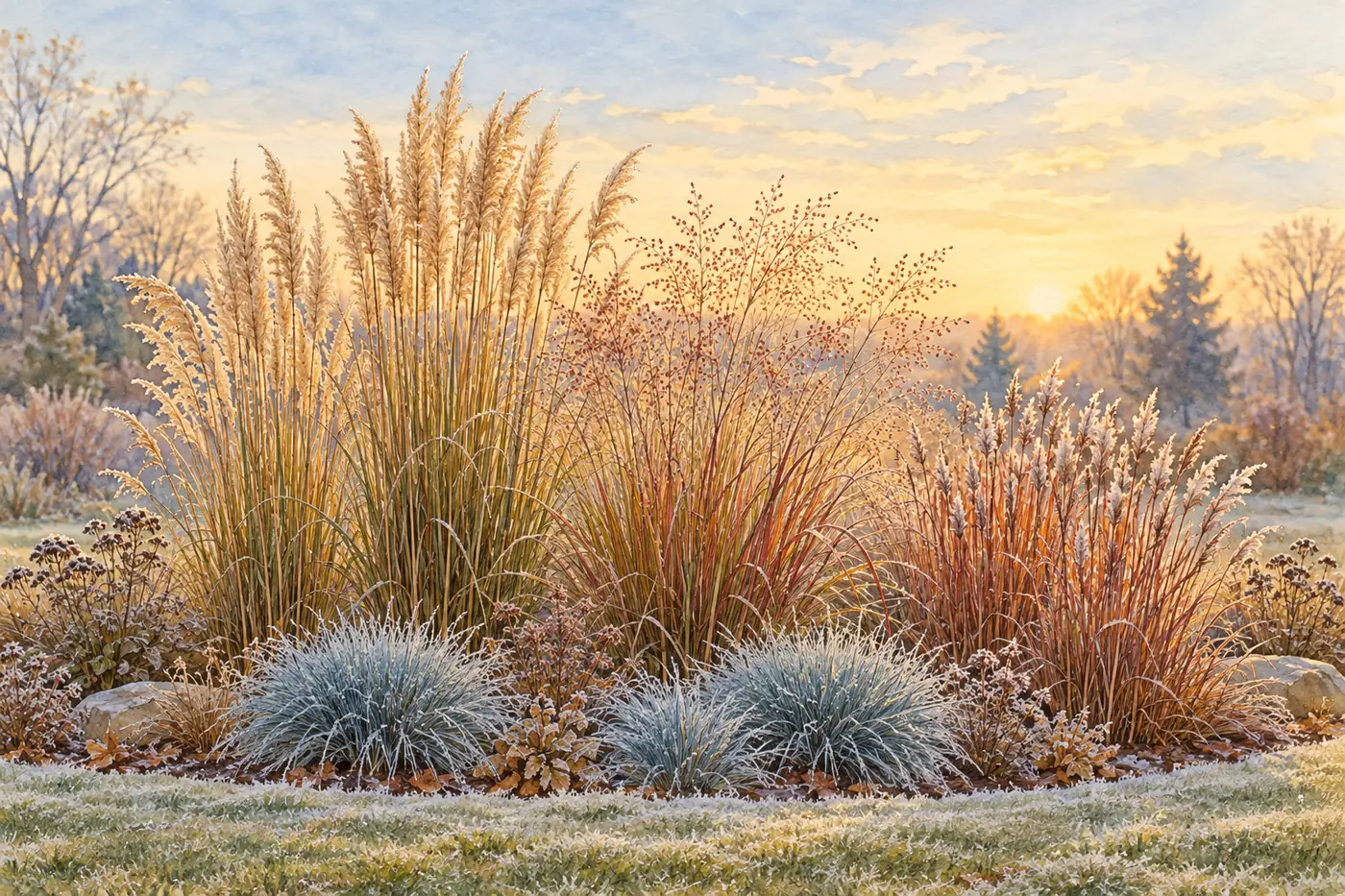
The grasses that come back reliably here are feather reed grass (Karl Foerster), switchgrass, little bluestem, prairie dropseed and blue fescue. Purple fountain grass is an annual in Minnesota, and miscanthus is rated to zone 5 and can seed into natural areas. Leave grasses standing all winter and cut them back in early spring, before new growth starts.
Ornamental grasses earn their spot twice: they move and catch the light all summer, then stand up in the snow when everything else has collapsed. They’re also some of the toughest plants you can grow on sandy, sunny ground.
Cool-season vs. warm-season grasses
Cool-season grasses grow in spring and fall, flower in late spring or early summer, and may rest in the heat of July. Warm-season grasses wake up late — don’t give up on them in May — then flower at the end of summer and peak in September. Mixing both gives you something fresh from May to frost.
Grasses that come back in Minnesota
| Grass | Type | Height | Hardy to | Good to know |
|---|---|---|---|---|
| Feather reed grassCalamagrostis ‘Karl Foerster’ | TypeCool-season | HeightAbout 5 ft | Hardy toZone 4 | Good to knowUpright plumes from June; doesn’t self-seed |
| SwitchgrassPanicum · native | TypeWarm-season | Height3–8 ft, by variety | Hardy toZone 4 | Good to knowHandles sand or clay; red fall color; can self-seed |
| Little bluestemSchizachyrium · native | TypeWarm-season | Height2–4 ft | Hardy toZone 3 | Good to knowLoves dry, sunny, sandy spots; copper-red in fall |
| Prairie dropseedSporobolus · native | TypeWarm-season | HeightAbout 3 ft | Hardy toZone 3 | Good to knowFine-textured mound; fragrant late-summer flowers |
| Blue fescueFestuca glauca | TypeCool-season | Height6–10 in | Hardy toZone 4 | Good to knowEdging and rock gardens; short-lived |
| Purple fountain grassPennisetum ‘Rubrum’ | TypeAnnual here | Height— | Hardy toNot hardy | Good to knowContainers and one-season color |
| Miscanthus | TypeWarm-season | HeightUp to 8 ft | Hardy toZone 5 (a few 4) | Good to knowCan seed into natural areas |
Hardiness and sizes from University of Minnesota Extension and the Morton Arboretum. Creeping miscanthus (M. sacchariflorus) is a restricted noxious weed in Minnesota and can’t be sold here.
Cutting back: wait for spring
Leave grasses standing all winter. They add structure and movement in the snow and shelter birds and insects. In early spring, before new growth starts, cut the old stems down to a few inches above the ground — a hedge trimmer makes it quick. Tie a big clump with twine first and it comes off in one tidy bundle. Blue fescue is the exception: it’s semi-evergreen, so just comb out the dead blades.
Grasses we grow
Common questions
When do you cut back ornamental grasses in Minnesota?
In early spring, before new growth starts. Leave them standing through winter: they look good in the snow and shelter wildlife. Cut the old stems down to a few inches above the ground. Blue fescue is the exception — just comb or pull out the dead blades in spring.
Is fountain grass perennial in Minnesota?
Purple fountain grass (Pennisetum ‘Rubrum’) is an annual here; it won’t survive the winter. The perennial fountain grasses are only marginally hardy in our zone, so we treat fountain grass as a container plant.
What ornamental grass is native to Minnesota?
Little bluestem, switchgrass, prairie dropseed and big bluestem are all Minnesota prairie natives. Little bluestem stays a tidy 2–4 feet and turns copper-red in fall, which makes it the easiest native grass for a home garden.