
Perennials & Shrubs
Drought-tolerant perennials for sandy soil
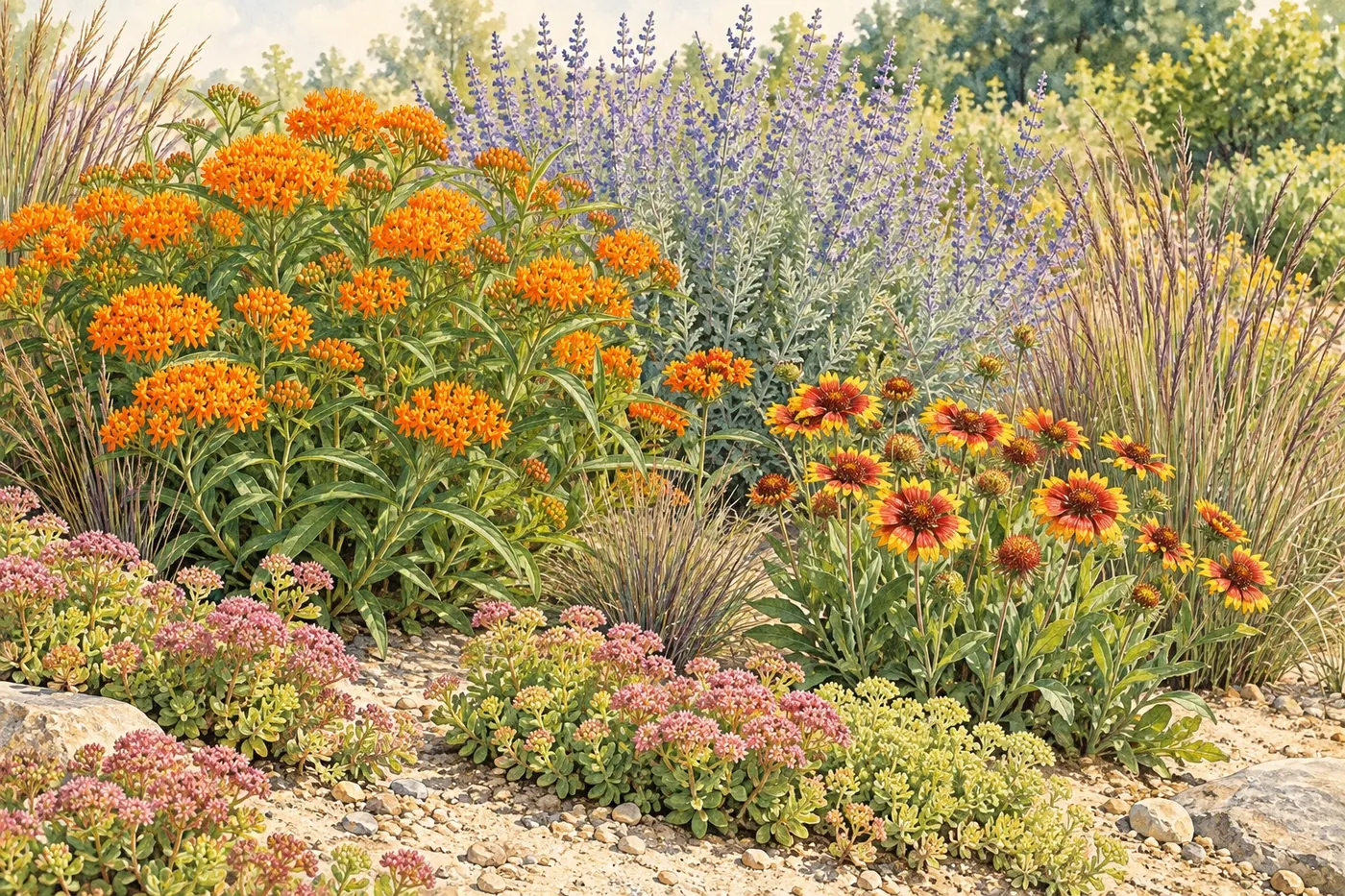
The short answer: pick plants that are built for dry prairie and rocky slopes, water them well for their first season, and then mostly leave them alone. A lot of the land around East Bethel sits on the Anoka Sand Plain, where water drains straight through. Fighting that with daily watering is a losing game. Planting for it is easy.
Our favorites for dry, sunny spots
- Butterfly weed. Bright orange, loved by monarchs, and it grows a deep taproot that finds water on its own. It's slow to wake up in spring, so don't give up on it in May.
- Russian sage. Silvery foliage and a haze of lavender-blue from July into fall. Rich, wet soil makes it flop; lean, sandy soil keeps it upright.
- Sedum. The tall ones like Autumn Joy for late color, and the creeping ones for edges and rock gardens. They store water in their leaves.
- Blanket flower. Red-and-yellow daisies all summer. It prefers lean soil and can be short-lived in rich, wet ground.
- Yarrow. Flat flower heads in many colors, feathery leaves, and very little need for water once established.
- Blazing star, coneflower and black-eyed Susan. Native prairie plants with deep roots.
- Little bluestem. A native grass that turns copper-red in fall and stands up all winter.
- Catmint, lavender and creeping thyme. Mediterranean herbs that want sharp drainage, which sandy soil gives them.
- Yucca. Evergreen, spiky and nearly indestructible in hot, dry spots.
Many of these are also on our Minnesota natives and deer-resistant lists.
The first year is the exception
"Drought-tolerant" means once established. For their first season, new plants have only a pot-sized root ball, and in sand that dries out fast. Water deeply once or twice a week through the first summer, more in a heat wave. By the second year most of these need water only in a long dry spell.
Planting tips for sand
- Add a little compost, an inch or two worked into the planting area, to hold some moisture. Don't overdo it: these plants do worse in rich soil.
- Water deeply and less often. A long soak once a week sends roots down, while daily sprinkling keeps them at the surface where it's hottest and driest.
- Mulch with 2″ of shredded bark or pea gravel to keep the soil cooler and slow evaporation. Keep it away from the crowns.
- Go easy on fertilizer. Most prairie and Mediterranean plants flop or get short-lived when overfed.
From the benchGroup plants by how much water they need. A thirsty hydrangea in the middle of a dry sedum bed means one of them is always unhappy.
↑ Back to all guides