
Perennials & Shrubs
Fall cleanup: cut it back or leave it?
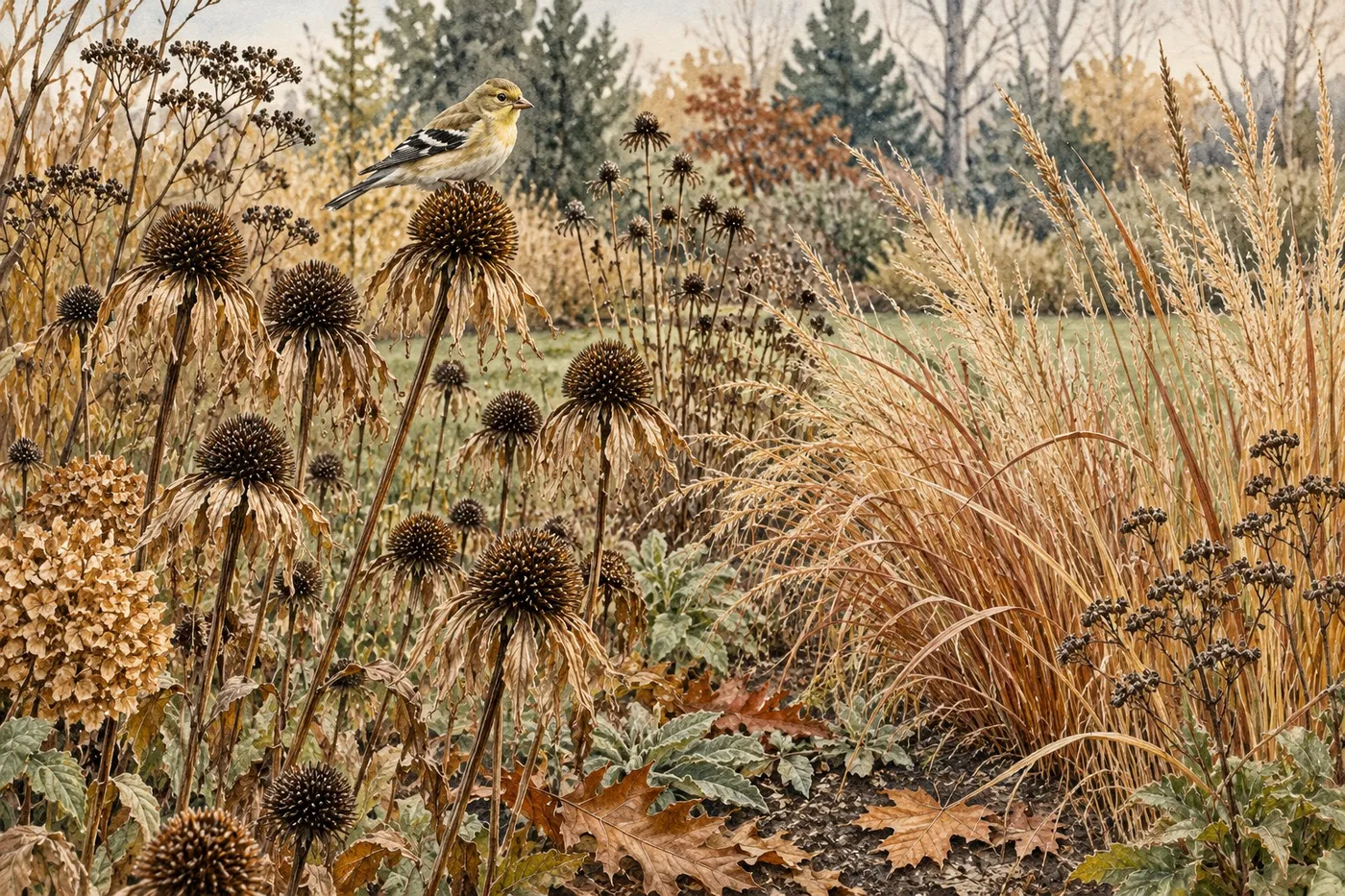
The short answer: leave most of it standing until spring, and cut back only the few plants that carry disease or pests into next year. A tidy bed in October is not a healthier bed in May. Standing stems catch snow, and in Minnesota that snow is the best winter insulation your perennials will get. The seed heads feed the goldfinches and chickadees all winter, and hollow stems give native bees a place to spend it.
Leave these standing
These plants look good in the snow, feed wildlife, or come through winter better with their tops on:
- Coneflowers and black-eyed Susans. The seed heads are goldfinch food from October into February.
- Ornamental grasses like Karl Foerster, little bluestem and switchgrass. Cut them in spring. Cut in fall, the crowns sit open to water and ice.
- Sedum (Autumn Joy and the other tall ones). The flower heads hold snow like little caps.
- Asters, yarrow, Joe Pye weed, blazing star and goldenrod. Seeds for birds, stems for bees.
- Garden mums. Mums overwinter noticeably better with their old stems left on. Mulch around them after the ground freezes.
- Butterfly weed. It's one of the last perennials up in spring. The old stems mark where it is, so nobody digs into it in May thinking the spot is empty.
- Russian sage and lavender. These are woody at the base. Cutting them in fall invites winter dieback; trim them once you see green buds in spring.
- Heuchera, creeping phlox and candytuft. Their leaves stay semi-evergreen and protect the crown. Leave them alone and tidy in spring.
- Panicle and Annabelle hydrangeas. The dried flower heads are pretty in snow. Prune in early spring (our hydrangea guide has the details).
Cut these back in fall
A few plants are worth cleaning up before winter, because what's on the leaves comes right back next year if you leave it:
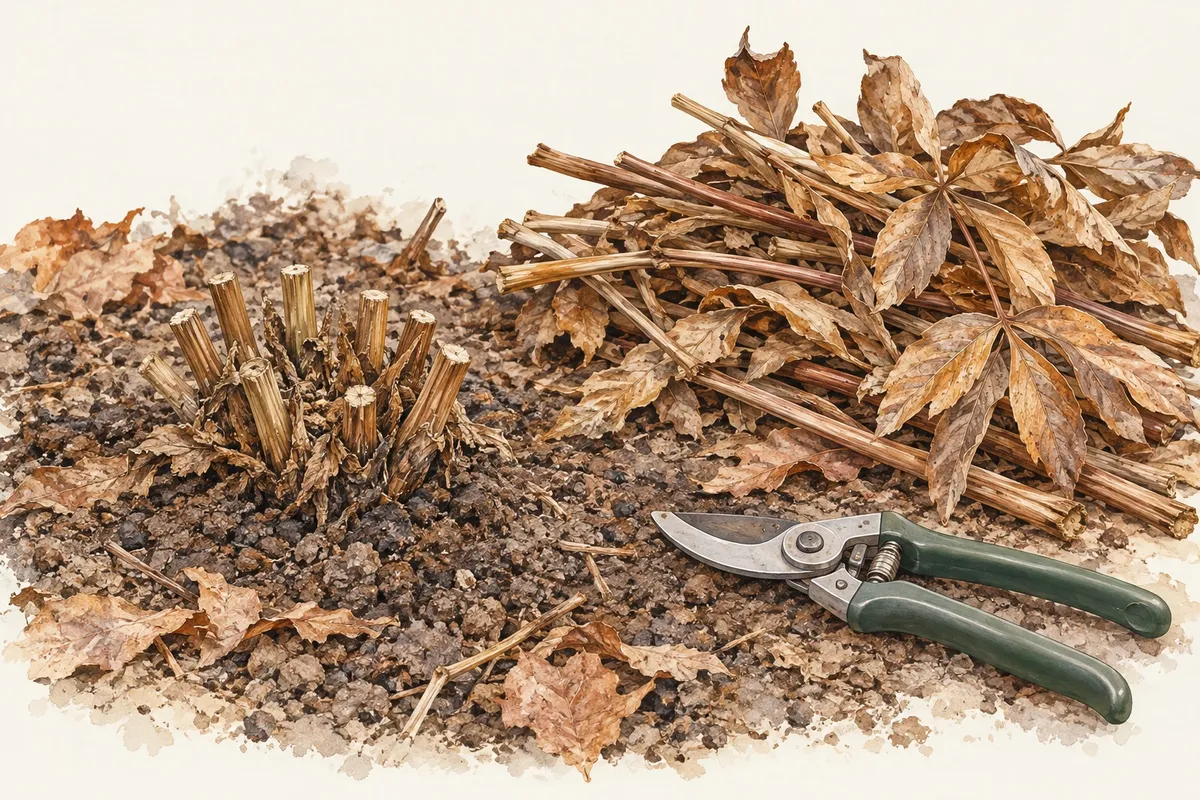
- Peonies. Cut the stems right to the ground after the foliage yellows or a hard frost knocks it down. Peony leaf blight (botrytis) overwinters on the old leaves and stems, and removing them is the single best thing you can do to prevent it next spring.
- Bearded iris. Trim the fans to 4–6″ and pull away the dead leaves. Iris borer moths lay their eggs on old foliage in fall; take the foliage and you take the eggs.
- Hostas and daylilies. Once frost turns the leaves to mush, pull or cut them. Soggy hosta leaves are where slugs lay eggs for next year.
- Anything with powdery mildew or leaf spot, most often bee balm and garden phlox. Cut it back and get the leaves out of the bed (more in our mildew guide).
- Hollyhocks with rust. Strip and remove the spotted leaves.
When to do it
Fall cuts: wait until the leaves have yellowed or a couple of hard frosts have flattened them. That's usually late October into November around East Bethel. Leaves that are still green are still sending food down to the roots, so there's no prize for getting out there early.
Winter mulch: for fall-planted perennials and anything borderline hardy, spread 3–4″ of straw or shredded leaves after the ground freezes, usually around Thanksgiving. The point isn't to keep the plant warm. It's to keep the ground from freezing and thawing over and over, which heaves young plants right out of the soil.
Spring cleanup: hold off until you've had several days in a row in the 50s, usually late April into May. Cut the old stems down to 8–15″ instead of to the ground. Native bees nest in those hollow stems through spring, and the new growth covers the stubble within a few weeks. Rake the leaves off the crowns so new shoots aren't smothered, but they can stay in the bed as mulch.
The one-line version
Leave the seed heads, grasses and sturdy stems for the birds and the snow. Cut the peonies, iris, mushy hostas and anything with mildew. Finish the rest in spring once it's warm enough that the bees have moved out.
↑ Back to all guides