
Containers & Baskets
Winterizing pots and containers
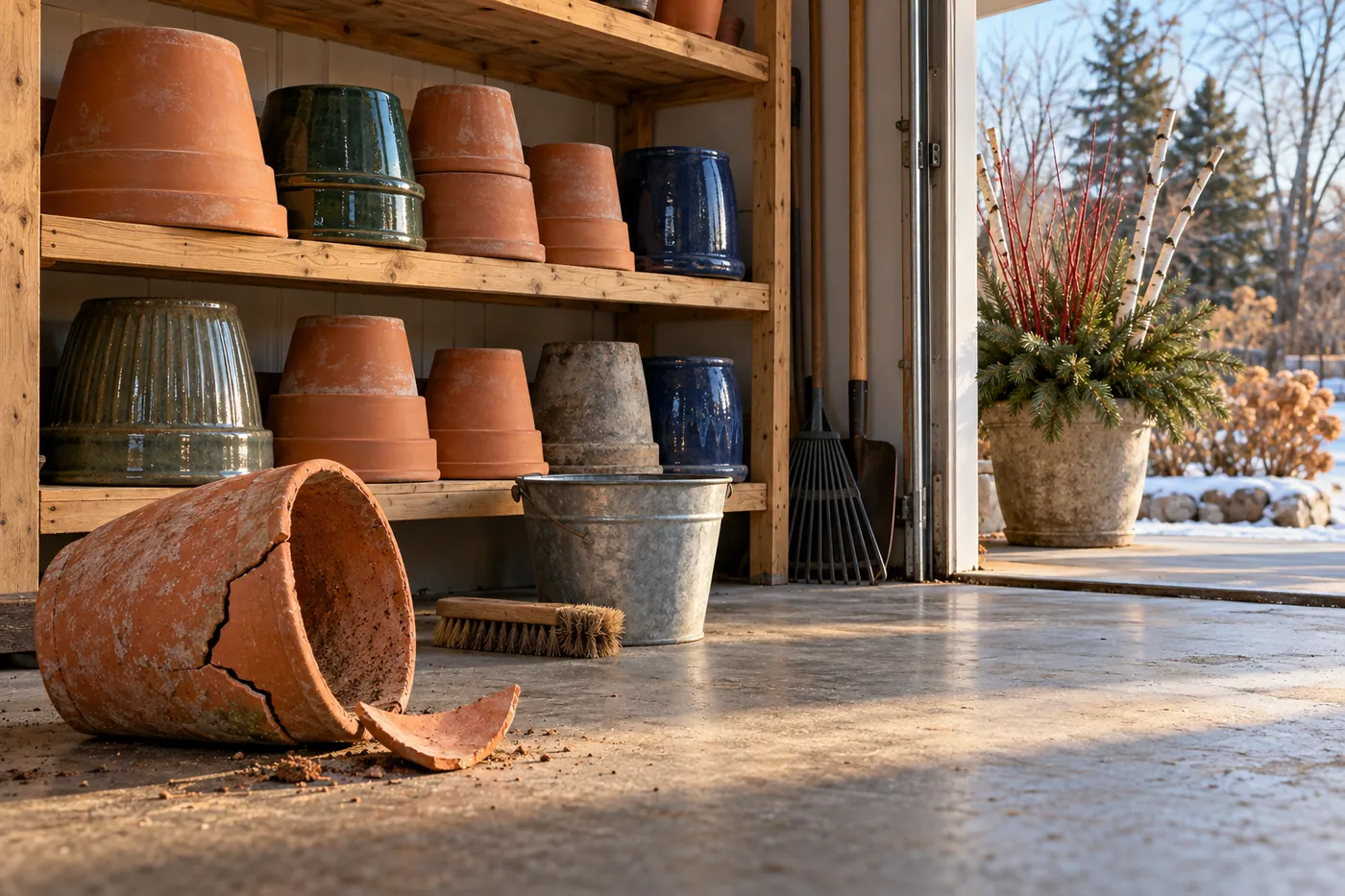
Empty and bring in terra cotta and ceramic pots, because freeze-thaw cracks them. Plastic, resin, fiberglass and metal can stay outside if they’re emptied or tipped over. Don’t count on a perennial or shrub surviving in a pot on the deck: plant it in the garden by mid-September, sink the pot in the ground, or move it to an unheated garage once it’s dormant.
What cracks and what doesn't
- Bring in: terra cotta, glazed ceramic and most decorative clay. They soak up water through the walls, and freeze-thaw cracks or flakes them, sometimes in a single winter.
- Usually fine outside: plastic, resin, fiberglass, metal and thick concrete. Even these do better empty, or at least tipped on their side, because a pot full of wet soil that freezes solid pushes outward on the walls.
- Self-watering pots: drain the reservoir before it freezes.
Putting pots away
- Pull the annuals after frost has finished them. Healthy plants go in the compost; anything that had mildew or bugs goes in the trash.
- Dump the potting mix. You can spread it in the garden, add it to the compost, or bag it to refresh and reuse in spring (see our potting mix guide).
- Brush the pots out. A soak in one part bleach to nine parts water before you reuse them in spring keeps last year's diseases from carrying over.
- Store clay and ceramic indoors, dry and off the floor if you can. Large pots too heavy to move can be emptied and turned upside down on a couple of boards, under a tarp, so water can't sit in them.
Keeping perennials and shrubs alive in pots
A hardy perennial in the ground has a few feet of soil insulating its roots. In a pot the roots are exposed to the air on every side, and roots are far less cold-hardy than the tops. A plant that's perfectly hardy in your garden can die in a container on the deck.
- Choose tough plants to begin with. For anything you want to overwinter in a pot, pick plants rated at least two zones colder than ours (zone 2 or 3).
- Best option: plant it out. Pull it from the pot and plant it in the garden by mid-September so it has time to root in. Our fall planting guide has the timing.
- Next best: sink the whole pot into the garden soil up to its rim, then mulch over the top after the ground freezes.
- Or huddle them. Group pots tight against the north or east side of the house and pack bags of leaves or straw around and between them.
- Or garage them. After a few hard frosts, when the plant is dormant, move the pot into an unheated garage or shed. Water lightly about once a month so the roots don't dry out completely, and bring it back out in April.
Tender plants like geraniums, cannas and dahlias are a different story; they come inside entirely. See saving geraniums, dahlias and cannas.
Common questions
Can I leave terra cotta pots outside in a Minnesota winter?
No. Terra cotta and most glazed ceramic pots absorb water, and when that water freezes and thaws the pot cracks or flakes. Empty them, let them dry, and store them in a garage, shed or basement. Plastic, resin, fiberglass and metal pots can stay out, but empty them or tip them over so wet soil doesn't freeze and push on the sides.
Can a perennial survive the winter in a pot in Minnesota?
Sometimes, but the roots are much more exposed in a pot than in the ground. Use plants rated at least two zones colder than ours, and either sink the pot into the garden soil, cluster pots against the house and surround them with bags of leaves, or move them into an unheated garage after they go dormant and water lightly once a month.
Can I reuse last year’s potting soil?
Yes. Dump it out of the pots in fall and bag it, spread it in the garden, or add it to the compost. If you reuse it in spring, refresh it first; our potting mix guide covers how.
Do I need to clean pots before reusing them?
It’s worth it. Brush them out, then soak them in one part bleach to nine parts water before you plant them in spring. That keeps last year’s diseases from carrying over.