
Spring timing
When to plant pansies in Minnesota
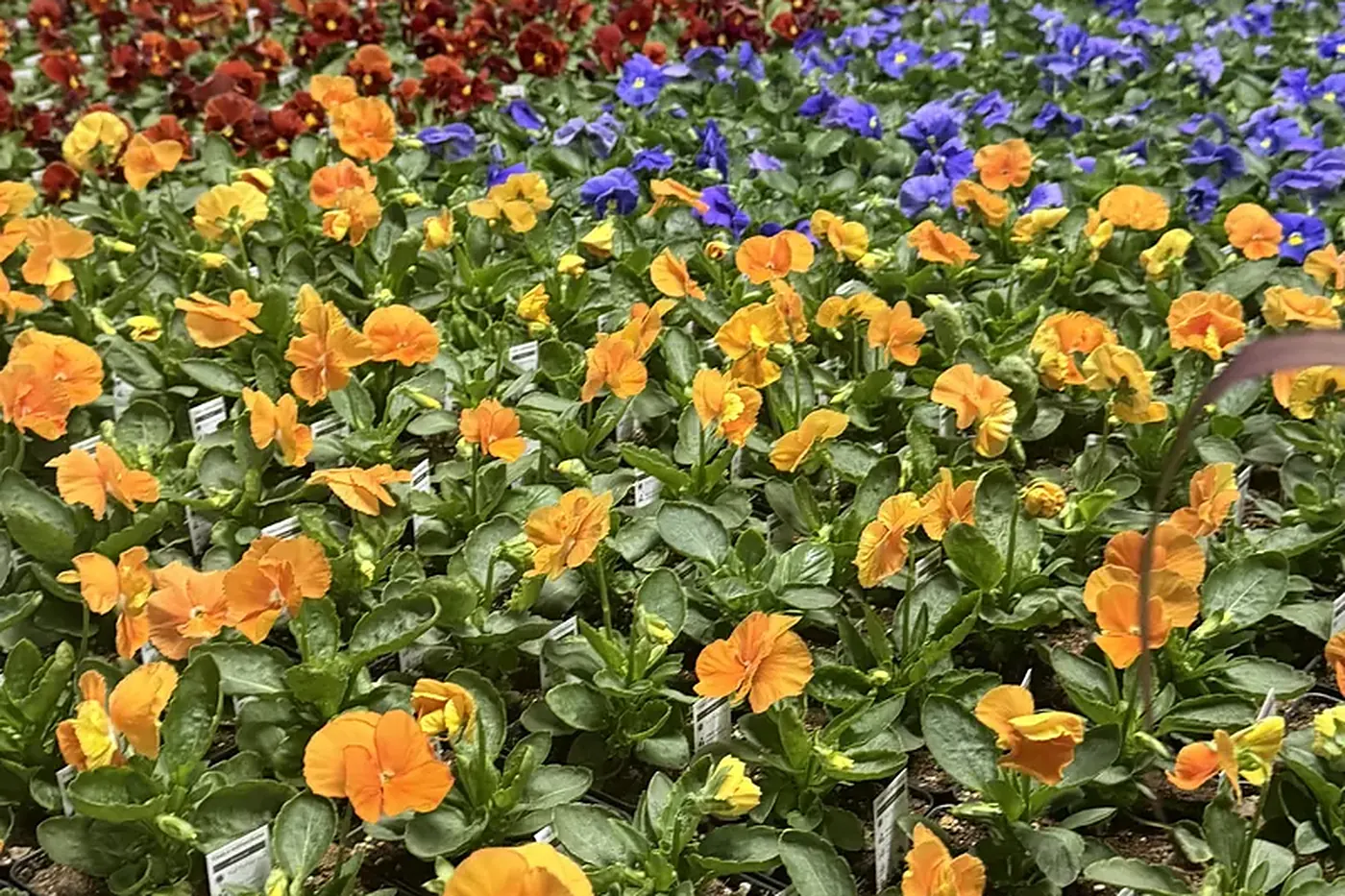
Plant pansies outside from mid-April around East Bethel — as soon as the soil has thawed and nights are staying above the mid-20s. They are the first color of the year for a reason: a hardened-off pansy takes frost, light snow and 25°F nights without complaint. Plant again in early September for fall color that outlasts the mums.
Every April someone asks us, “Isn’t it too early?” while standing next to a bench of blooming pansies. It isn’t. Pansies and violas are cool-season annuals: they grow best between about 40°F and 65°F and shut down when summer arrives. Waiting for Memorial Day to plant them wastes the six weeks they like most.
The spring window, week by week
| When | What to do | Why |
|---|---|---|
| Late March | What to doBuy them, keep them outside on a porch or step | WhyOur pansies are grown cool and hardened off, so they are ready for the weather when the doors open. Let them sit outside in their pots for a few days before planting. |
| Mid-April | What to doPlant in beds, pots and bowls | WhySoil is thawed and workable; typical lows are in the 30s. A light frost does nothing to a pansy. Water them in and don’t fuss. |
| Late April – May | What to doDeadhead and feed | WhyPinch off spent flowers so plants keep budding. A half-strength liquid feed every two weeks keeps the color coming. |
| Mid-June | What to doEnjoy the last big flush | WhyNights over 60°F and days over 80°F end the show. Shear plants back by a third if you want to try for a few more weeks. |
| Late June | What to doSwap or shear | WhyReplace with heat-lovers (vinca, zinnias, lantana), or cut back hard, keep watered, and some will rebloom when September cools off. |
How cold can pansies take?
A hardened-off pansy handles temperatures down to about 20–25°F, and snow on top of them is actually insulation. Flowers that are open during a hard freeze may flop and look done for, then stand back up by noon. Two things cause real damage: a plant that came straight from a warm greenhouse into a freezing night without hardening, and wet, frozen soil around the roots, which is why drainage matters more than the calendar.
If a night below 20°F is forecast after you have planted, throw an old sheet or a frost blanket over the bed in the evening and pull it off in the morning. Pots can simply come into the garage for the night. Our frost alerts email you when that kind of night is coming for East Bethel.
Planting them well
- Pick the spot. Full sun to part shade. In April, sun is welcome; by June, a little afternoon shade keeps them going a week or two longer.
- Loosen the soil and add compost. Pansies want moisture but hate sitting in water. In heavy or compacted soil, mix in an inch or two of compost; in our sandy north-metro soil, the compost holds water instead.
- Space 6 to 8 inches apart. Closer looks fuller faster and is fine for a bed you will replant in June. In a 12-inch bowl, ten plants make a full dome.
- Water in, then let the surface dry between waterings. Cool weather means they drink slowly. Soggy pansies get root rot and yellow leaves.
- Feed lightly, deadhead often. A balanced liquid fertilizer at half strength every two weeks, and pinch off faded flowers before they set seed.
Fall pansies: the second season
September is the other pansy month. Planted in early to mid-September, pansies bloom through October and often into November, long after frost has finished the impatiens. They shrug off every frost of fall and keep going until the ground freezes solid. Fall pansies sit next to the mums on our benches from Labor Day on, and they are a better buy than most people realize: six to eight weeks of color for a few dollars a plant.
With a mulch of leaves or straw once the ground freezes, a fall-planted pansy sometimes comes back for a few weeks of bloom the next April. It is not something to count on in zone 4, but it costs nothing to try.
Pansies we grow
Spring and fall pansies are all grown chemical-free in East Bethel. Tap through for this year’s varieties and colors:
Common questions
Is it safe to plant pansies yet?
If the forecast lows are above about 25°F and the soil has thawed, yes. Around East Bethel that is usually the second or third week of April. Pansies that have been hardened off at a greenhouse take frost in stride; what hurts them is going straight from a warm house into a 20°F night. Our Is it safe to plant yet? page checks this week’s lows for you.
How late is too late to plant pansies in Minnesota?
Spring pansies planted after mid-May still bloom, but they run out of cool weather fast. By late June, days over 80°F make them stretch and sulk. For color that lasts, plant them in April and swap in heat-lovers in late June. For fall, plant pansies in early to mid-September so they root in before the ground freezes.
Do pansies prefer pots or the ground?
Either, as long as the soil drains. Pots warm up faster in April and can be moved to the porch on a hard-freeze night, so they win early in the season. In the ground, pansies stay cooler and bloom a little longer into June. A 12-inch bowl holds about ten plants; in a bed, space them 6 to 8 inches apart.
Will pansies come back next year?
Usually not here. Pansies are hardy to about zone 6, and a Minnesota winter is zone 4. Fall-planted pansies sometimes surprise you by reblooming in April if they are mulched and the snow cover is good, but treat that as a bonus, not a plan.