
Perennials & Shrubs
Protecting a new shrub through its first winter
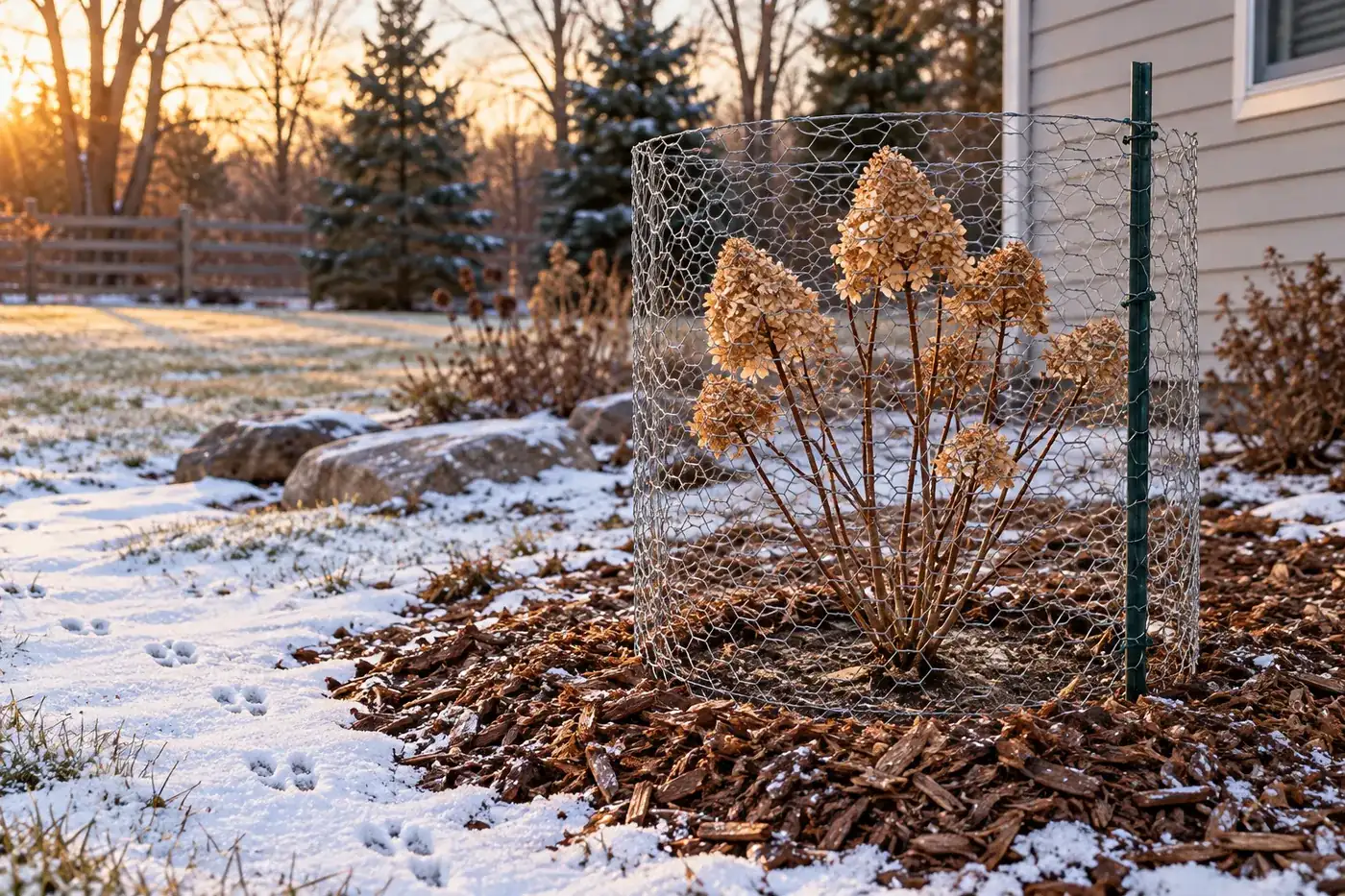
The short answer: water it until the ground freezes, mulch the roots, put a fence around it for the rabbits, and leave the pruners alone. A shrub planted this year is still living mostly off the root ball it came with. It hasn't grown into your soil yet, so it dries out faster and has less reserve to recover from damage than the same shrub will next year.
1. Water right up to freeze-up
This is the big one. Shrubs keep growing roots in fall until the soil gets close to freezing, and evergreens lose water through their needles all winter long. Give each new shrub a slow, deep soak every week we don't get about an inch of rain, right up until the ground freezes, usually around Thanksgiving. A hose at a trickle at the base for 20–30 minutes does it. More in our fall watering guide.
2. Mulch the root zone
Spread 2–3″ of wood chips or shredded bark over the area the roots occupy, out to roughly the width of the branches. Keep it pulled back a few inches from the stems. Mulch piled against the bark holds moisture against it and gives voles a hiding place while they chew.
3. Fence out the rabbits
Rabbits eat bark and buds all winter, and they love young shrubs: roses, serviceberry, spirea, hydrangea and fruit trees most of all. Once the snow piles up they can reach a lot higher than you'd expect.
- Make a cylinder of chicken wire or ¼″ hardware cloth a few inches wider than the shrub.
- Make it tall enough to stand at least 18″ above your usual snow depth. Two to three feet is typical around here.
- Push the bottom an inch or two into the soil or pin it down so rabbits can't squeeze under, and hold it up with a stake or two.
- Put it on in late October or November and take it off in April.
Repellent sprays help, but they wash off and need reapplying. For a shrub you just paid for, the fence is the sure thing. Our deer and rabbit guide covers what they leave alone.
4. Help evergreens with wind and snow
- Burlap screens on stakes on the south and west sides block the sun and wind that brown out new arborvitae, yews and boxwood. Leave the top open and don't wrap the plant tightly. See why evergreens turn brown.
- Tie up upright arborvitae and junipers with soft twine spiraled from bottom to top, so heavy snow can't split them open.
- Keep new shrubs out of the path of snowblower throw and road salt if you can. Salty snow piled on a shrub all winter will burn it.
5. What to skip
- No fertilizer after midsummer. It pushes soft growth that won't harden in time.
- No fall pruning. Hydrangeas, lilacs, ninebark and spirea all set up for next year in fall. Any pruning waits for spring, and on lilacs, until right after they bloom.
- No plastic wrapping. It traps heat and moisture against the plant.
Next spring
Don't judge too early. Many shrubs, panicle hydrangeas and ninebarks especially, leaf out later than you'd expect in their second spring. Wait until late May before deciding anything is dead, then scratch a twig with your thumbnail: green underneath means it's alive.
Common questions
How do I protect a newly planted shrub over winter in Minnesota?
Keep watering it deeply every week without rain until the ground freezes, usually around Thanksgiving. Spread 2 to 3 inches of mulch over the root zone, kept a few inches away from the stems. Put a cylinder of chicken wire or hardware cloth around it to stop rabbits, and skip fall fertilizer and fall pruning.
Should I wrap my new shrubs in burlap?
Most deciduous shrubs don't need it. Burlap is worth it for broadleaf and needled evergreens in windy or sunny spots, such as boxwood, yews and arborvitae: set up a screen on stakes on the south and west sides rather than wrapping the plant tightly.
↑ Back to all guides