
Planting defensively, part two
Deer- and rabbit-resistant perennials (that we actually grow)
Updated October 2026
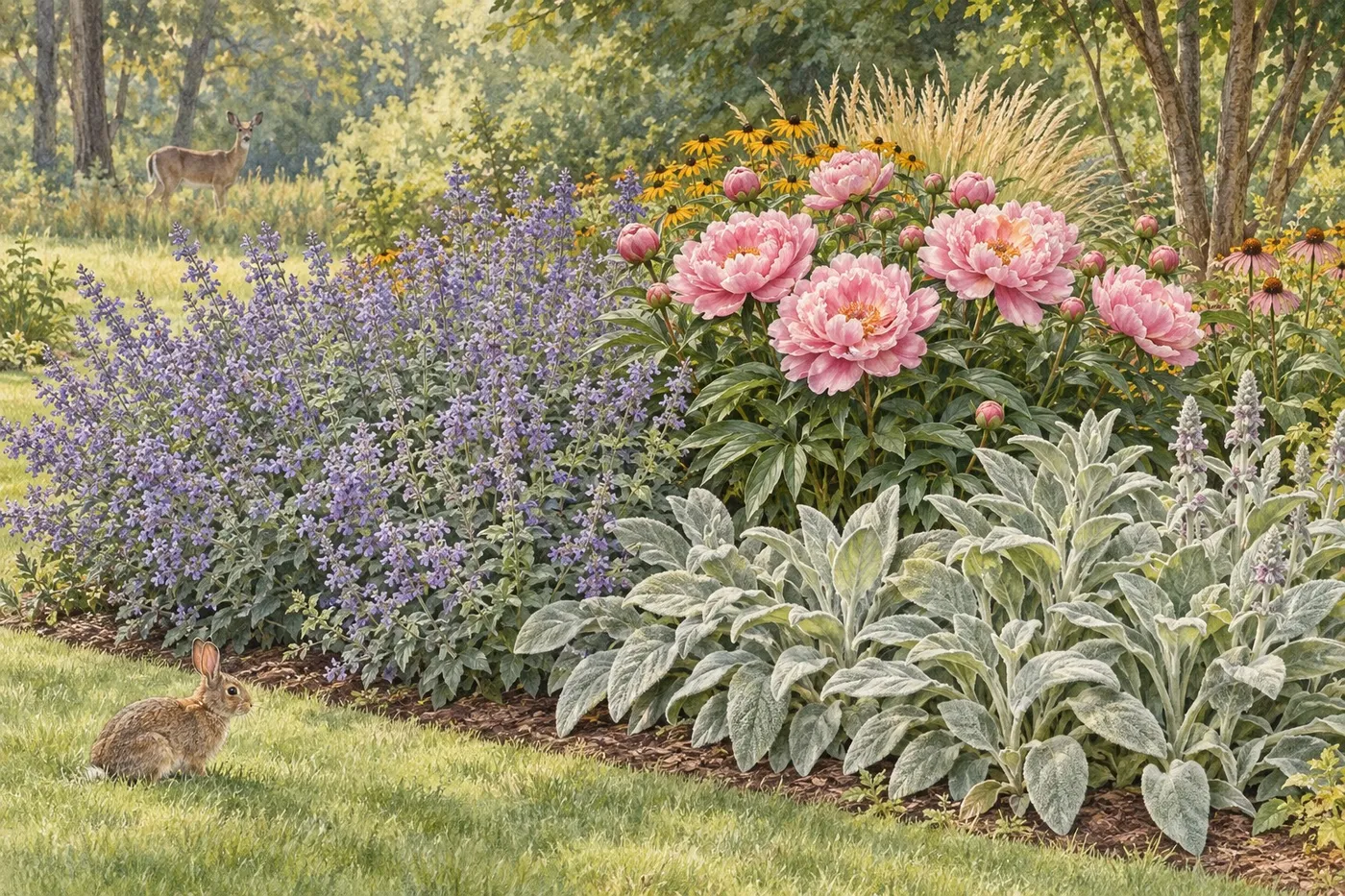
Deer and rabbits usually skip perennials that are strongly scented, fuzzy or toxic: catmint, peonies, Russian sage, yarrow, perennial salvia, baptisia and monkshood in sun, and astilbe, brunnera, lungwort and coral bells in shade. Protect the candy: hostas, daylilies, tall garden phlox and roses. “Resistant” means usually skipped, never guaranteed, and every new plant needs protection its first spring.
Perennials raise the stakes: an annual eaten in June is a bad week, but a perennial eaten every June is a bad investment. The good news is that some of the toughest, longest-lived perennials on our benches are also the ones deer and rabbits reliably walk past. Same honesty as our annuals guide — "resistant" means usually skipped, never guaranteed.
Peony
Decades of June blooms, and browsers never touch them
Catmint
Months of purple haze — the scent deer detour around
Foxglove
Toxic to browsers — which is exactly why it's never browsed
Lamb's Ear
Velvet to your hand, wool in their mouth
The sunny border backbone
Build the bones of an unfenced bed from these and you'll sleep fine: catmint, perennial salvia, Russian sage, and yarrow (aromatic, all four), peonies (untouched for a century in farmyards for a reason), baptisia, gaillardia, coneflowers, veronica, dianthus, obedient plant, balloon flower, helenium, goldenrod, centaurea, ice plant, and lupine. For drama, delphinium, Oriental poppies, red hot poker, and yucca — armored, bitter, or both. And monkshood closes the season about as close to deer-proof as nature gets (it's genuinely toxic, so plant it away from where kids and pets graze too).
Shade beds they leave alone
Shade is where most people get burned, because the classic shade plant — hosta — is the deer's favorite food on Earth. Build instead with astilbe, brunnera, pulmonaria, lamium, foamflower, goatsbeard, bleeding heart, columbine, coral bells, Jacob's ladder, snowdrop anemone, and great blue lobelia. That's a full, layered shade garden with nothing on the menu.
Natives and grasses: the low-drama layer
Our MN Native badge overlaps heavily with this list — milkweeds (milky sap), bee balm and mountain mint (aromatic), Joe Pye weed, boneset, ironweed, and little bluestem all shrug off browsing. Ornamental grasses — Karl Foerster, switchgrass, blue fescue — are almost never touched, and lamb's ear, artemisia, and ornamental alliums round out the texture layer with fuzz and onion breath.
The perennial candy list
Protect or fence these four, because resistance lists won't save them: hostas (deer dessert), daylilies (the flower buds especially), tall garden phlox, and roses. Rabbits add their own targets: campanula, young coreopsis shoots, and almost anything freshly planted and tender — a cheap ring of chicken wire for a plant's first spring pays for itself.
Resistant perennials we grow
Common questions
Is catmint deer and rabbit resistant?
Yes. Catmint (nepeta) is one of the most reliable perennials for an unfenced yard. The strongly scented, fuzzy leaves keep both deer and rabbits walking past, and only brand-new plants get the occasional test nibble.
Are mums deer and rabbit resistant?
Mostly. The bitter, strongly scented leaves keep most deer and rabbits away, and we mark mums as resistant to both. Hungry animals will still nibble tender new shoots in spring or buds in late fall when food runs short. To get mums back every year, see will my mums come back?
Are dianthus deer and rabbit resistant?
Deer usually leave dianthus alone. Rabbits are less reliable: they’ll nibble the low, grassy leaves, especially in early spring. A ring of chicken wire for the first spring takes care of it.
Are peonies deer and rabbit resistant?
Yes. Peonies are about as close to untouchable as perennials get, which is why farmyard peonies survive for generations with no protection at all.
Is balloon flower deer and rabbit resistant?
Deer usually pass it by. Rabbits sometimes go after the young shoots when they come up in late spring, so protect balloon flower for its first season.
Are asters deer and rabbit resistant?
Deer usually skip them. Rabbits will eat young asters, so cage spring plantings until they toughen up.
Are hostas deer resistant?
No. Hostas are a deer favorite. For a shady bed they leave alone, build with astilbe, brunnera, lungwort, coral bells, bleeding heart and foamflower instead, or fence the hostas.
What about petunias, impatiens and other annuals?
Petunias, impatiens and SunPatiens, pansies, calibrachoa and sweet potato vine are all on the deer and rabbit menu. Our deer- and rabbit-resistant annuals guide lists the ones they skip.
Do deer-resistant perennials need protection the first year?
Yes, often. Every perennial is at its most tender in its first spring, so repel or cage new plantings for year one. Once they’re established, the resistant ones on this page usually look after themselves.