
Problem Solving
Why evergreens turn brown in winter, and how to stop it
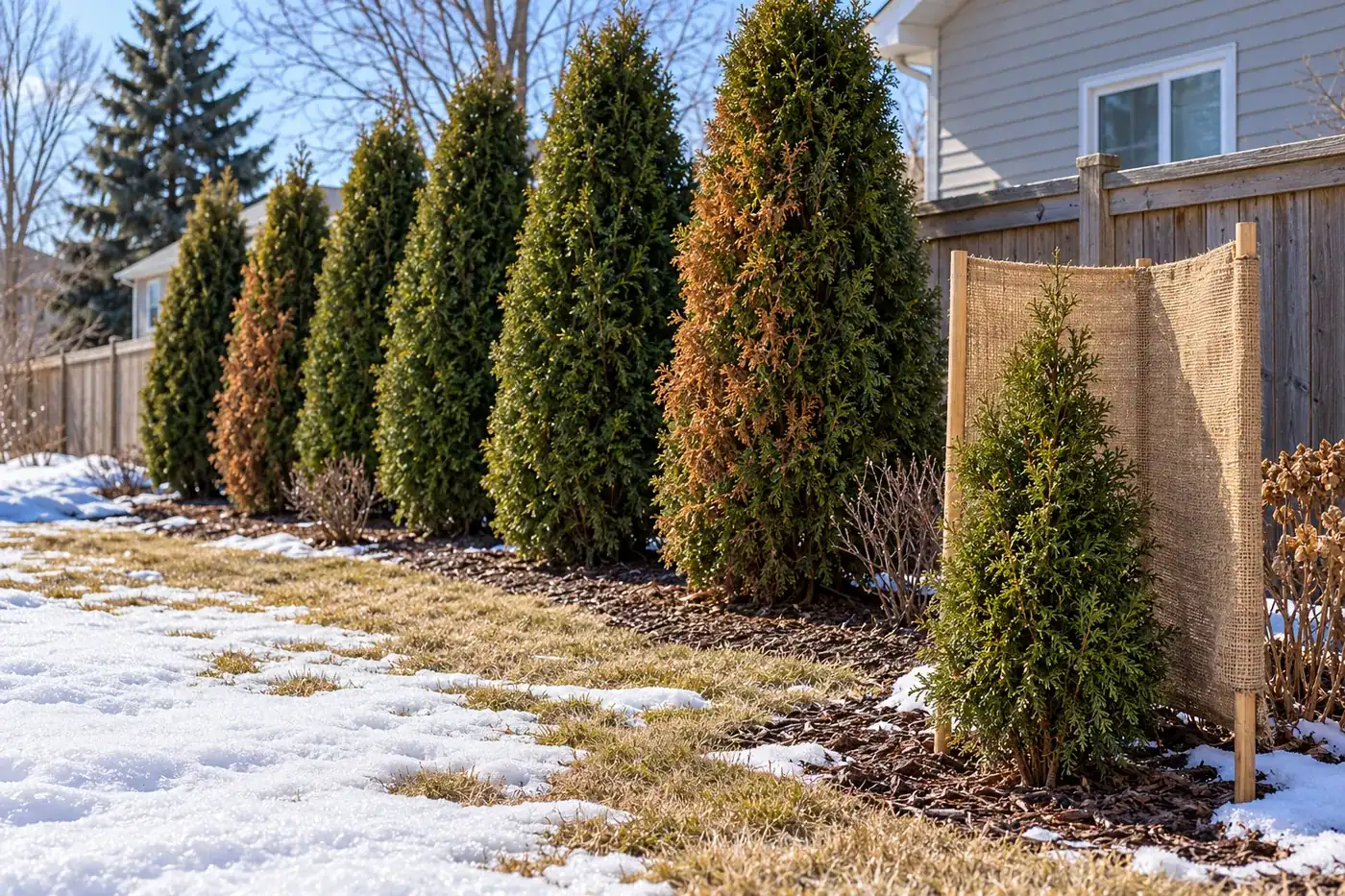
The short answer: most evergreens that turn brown over a Minnesota winter didn't freeze. They dried out. Needles and evergreen leaves keep losing water all winter. On a bright, windy day in February or March, the foliage warms up and loses moisture fast, but the roots are locked in frozen ground and can't send any up to replace it. The leaves dry and turn brown, and you usually don't see it until the snow melts.
How to tell it's winter burn
- The browning is worst on the south and west sides, or on whatever side faces open wind.
- Parts that were buried under snow stay green, so there's often a clean line where the snow sat.
- It shows up in March and April, not in the middle of winter.
- It's worst in a winter after a dry fall, or on plants put in that year.
Other things look similar. Road salt spray browns the side facing the street or driveway. Snow load breaks branches and leaves them brown from the break out. Rabbits and deer leave chewed-off tips rather than brown ones. And a little yellowing of older inner needles in fall is normal shedding, not damage.
Which ones get it
Arborvitae (Emerald Green especially), yews and boxwood are the most common. Rhododendrons and other broadleaf evergreens are even more prone. Spruce, pine and most junipers handle our winters better. Among arborvitae, Techny and its relatives hold up noticeably better here than Emerald Green.
Preventing it
- Water until freeze-up. This matters more than anything else. An evergreen that goes into winter with moist soil around its roots has a reserve to draw on. Keep giving them a deep soak every dry week until the ground freezes. Our fall watering guide has the details.
- Mulch 2–3″ deep over the root zone. It holds moisture and keeps the soil from freezing quite as deep.
- Burlap screens on stakes on the south and west sides, for young plants and exposed spots. Leave a gap between the burlap and the plant, and leave the top open. Wrapping a plant tight in burlap traps heat and moisture and can cause the problem you're trying to stop.
- Plant in the right spot. Yews and boxwood do best out of afternoon sun and winter wind, such as the north or east side of the house.
What to do about the damage
Be patient. Don't cut anything until June. Brown needles won't turn green again, but if the buds and twigs underneath are alive, new growth will push out and cover them. Scratch a twig with your thumbnail: green underneath is alive, brown and dry is dead.
- Yews and boxwood recover well. Even badly browned plants usually green back up from the inside once you trim out the dead tips.
- Arborvitae and junipers often don't regrow from bare brown wood. Once new growth has shown you what's alive, prune out the dead sections back to green. The green around them will gradually fill in, though a badly burned arborvitae may take a couple of seasons to look full again.
- Give it a normal watering through the next summer. Skip extra fertilizer; a stressed plant doesn't need to be pushed.
Common questions
Why do my arborvitae turn brown in winter?
Usually it's winter burn, which is drying out rather than freezing. On sunny, windy days in late winter the needles lose water, but the roots are in frozen ground and can't replace it, so the foliage dries and browns. Damage usually shows in March and April on the south and west sides and on plants that went into winter dry.
Will my brown evergreen come back?
Wait until June to decide. If the buds and twigs under the brown foliage are still alive, new growth will fill in. Yews and boxwood regrow well from older wood; arborvitae and junipers often don't regrow from bare brown sections, so once you know what's dead, prune it out and let the green around it fill in over a season or two.
↑ Back to all guides