
Pests & critters
Japanese beetles, without the chemicals
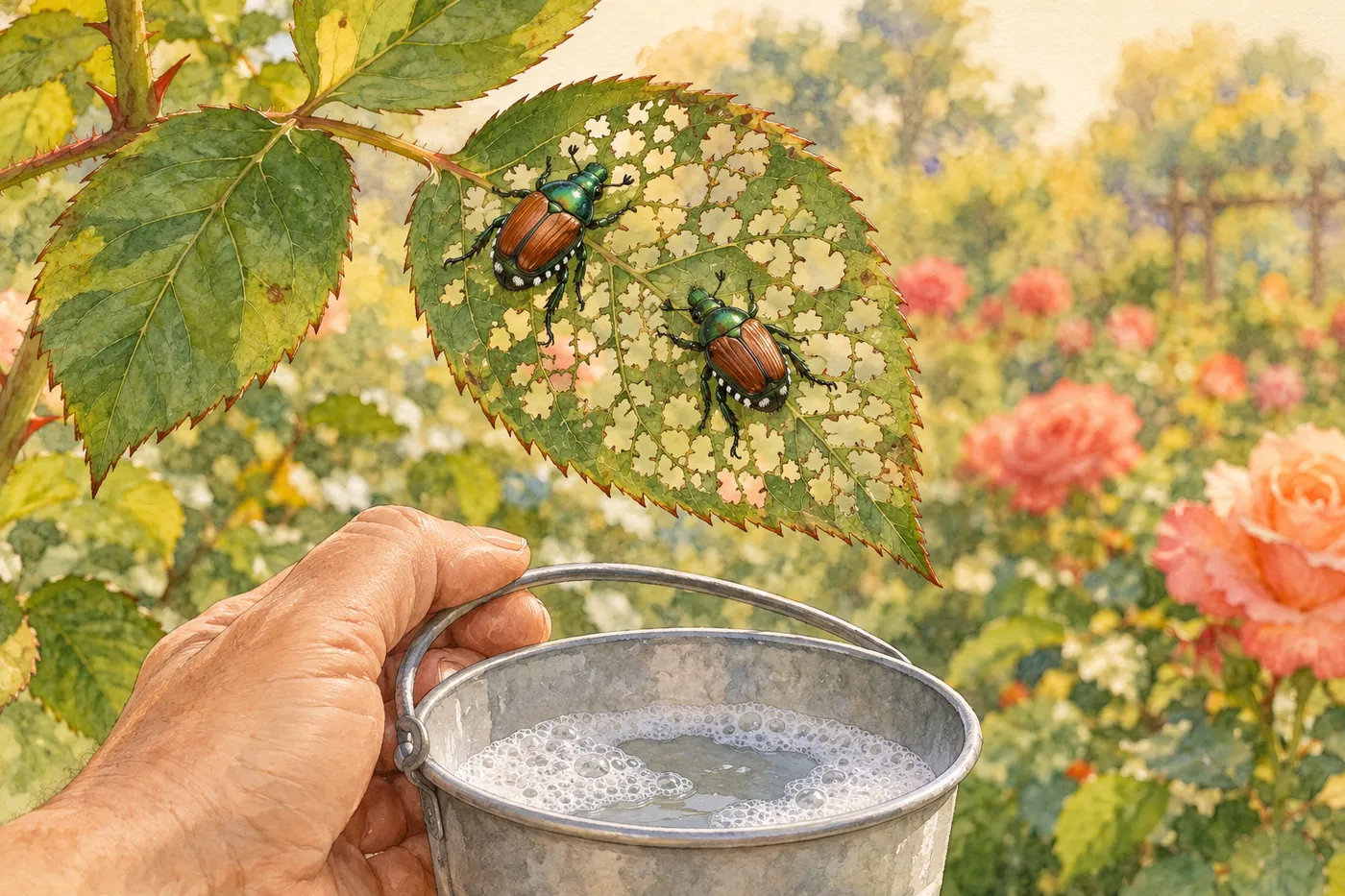
Japanese beetles show up in late June or early July and feed through August, peaking in late July. The most effective non-chemical control is knocking them into a bucket of soapy water every morning or evening, starting the day you see the first one. Skip the bag traps — University of Minnesota Extension found they don’t reduce feeding and can pull more beetles into your yard.
Japanese beetles were first found in Minnesota in 1968, and today they’re most common in the Twin Cities and southeast Minnesota. They chew leaves into lace and eat more than 300 kinds of plants — but they’re a nuisance far more often than a killer, and you can keep them in check without spraying.
Know their schedule
| When | What’s happening | What you do |
|---|---|---|
| Spring | What’s happeningGrubs finish feeding on grass roots and pupate in the soil | What you doNothing yet |
| Late June – early July | What’s happeningAdults emerge and start feeding | What you doStart hand-picking the day you see the first one |
| July | What’s happeningPeak feeding (around late July); females lay eggs 1–3 inches deep in lawns | What you doPick daily; net prized plants; go easy on lawn watering |
| August | What’s happeningFeeding tapers off by mid to late August; eggs hatch into grubs | What you doKeep picking stragglers |
| Fall – winter | What’s happeningGrubs feed on roots, then overwinter deeper in the soil | What you doA healthy lawn can handle up to about 10 grubs per square foot |
Life cycle and timing from University of Minnesota Extension.
What actually works
- Hand-pick into soapy water, daily. Hold a bucket of soapy water under the leaf and tap — the beetles drop. Morning or evening is best, when they’re cool and slow. Damaged leaves give off scents that attract more beetles, so starting early and staying at it matters.
- Cover what you love. Fine netting keeps beetles off roses, raspberries, grapes and small trees. Don’t cover plants that need bees to pollinate them while they’re blooming — hand-pick until the fruit sets, then cover.
- Leave the beetles with white dots. Small white eggs on a beetle’s back are from the winsome fly, a parasite now established in Minnesota. In 2024 it parasitized 16–30% of beetles at monitored sites. Those beetles are already doomed — let the flies multiply.
- Let the lawn go a little dry in July. Eggs and young grubs need moist soil, and dry soil reduces their survival. Healthy turf shrugs off moderate grub numbers.
What doesn’t
Bag traps draw beetles from the whole neighborhood, and only about three-quarters of the ones they attract end up in the bag; the rest feed nearby. Milky spore hasn’t shown any benefit in modern university trials. Beneficial nematodes for grubs give inconsistent results. If you reach for a spray, read the label: neem only deters, and pyrethrins are toxic to bees, so never use them on blooming plants. Our chemical-free pest control guide covers the rest of the toolbox.
Plants they love — and plants they skip
| Beetles go for | Beetles usually leave alone |
|---|---|
| Roses, grapes, raspberries, lindens, crabapples, birch | Beetles usually leave aloneLilacs, forsythia, boxwood, arborvitae, spruce, fir, pine, yew |
| Basil, hollyhocks, marigolds, Virginia creeper, sweet corn silks | Beetles usually leave aloneMums, daylilies, clematis, geraniums, maples, oaks, redbud |
Host and non-host lists from University of Minnesota Extension.
Common questions
When do Japanese beetles come out in Minnesota?
Adults appear in late June or early July, feed mostly in July and August with a peak around late July, and are mostly done by mid to late August, though a few hang on into September.
Do Japanese beetle traps work?
No. University of Minnesota Extension says traps don’t reduce feeding: they lure beetles from all around, only about three-quarters of them actually end up in the bag, and plants near the trap often get hit harder.
What kills Japanese beetles without chemicals?
Knocking them into a bucket of soapy water is the most practical option for most gardens. Do it every morning or evening, when beetles are cool and sluggish, starting the day you see the first one. Fine netting protects small plants, and a native parasitic fly is now helping control them in Minnesota.