
Planting defensively
Deer- and rabbit-resistant annuals (from our own benches)
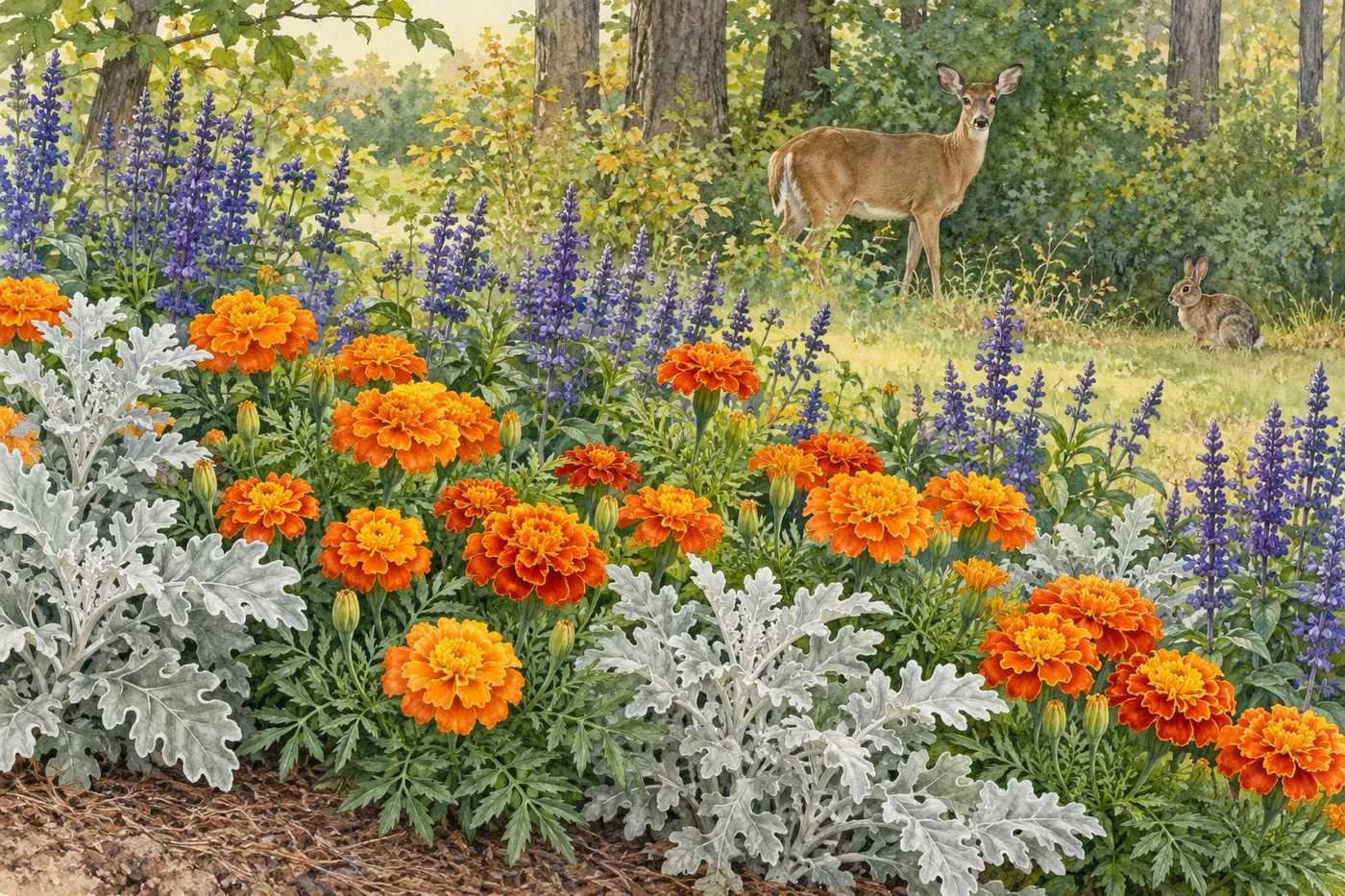
Deer and rabbits usually skip annuals that are strongly scented, fuzzy, bitter or bristly: lantana, salvia, heliotrope, annual vinca, marigolds, zinnias, gomphrena, dusty miller, begonias and most herbs. The ones they go looking for are impatiens and SunPatiens, pansies, petunias, calibrachoa and sweet potato vine, so plant those near the house or behind a fence. No plant is deer-proof; “resistant” means usually skipped.
First, the honest part: there is no such thing as a deer-proof plant. A hungry deer in a dry June will taste anything once, and a fawn tastes everything twice. But deer and rabbits are creatures of preference, and some plants rank so low on the menu they're usually left alone. Everything below is something we actually grow.
Fuzzy & silver
Felted leaves feel like wool in the mouth — dusty miller's whole defense
Strongly scented
Herbs, salvias, lantana, marigolds — perfume to us, warning label to them
Bitter or milky sap
Vinca, euphorbia, heliotrope, begonias — one taste teaches the lesson
Rough & bristly
Sandpaper stems and papery blooms — zinnias and gomphrena chew badly
Sun bloomers they usually skip
Lantana, salvia, and heliotrope lead the list — pungent, and in heliotrope's case genuinely toxic, so browsers learn fast. Vinca (annual vinca) carries bitter alkaloids nothing wants a second bite of. Marigolds earn their old-wives reputation on scent, zinnias and gomphrena chew like sandpaper and paper, and cleome is sticky and smelly — a double no. Round out a border with angelonia, ageratum, celosia, cosmos, cuphea, snapdragons, verbena, dianthus, and sweet alyssum — all rated as seldom bothered.
Foliage and shade choices
Dusty miller is wool in a deer's mouth; Persian Shield and Euphorbia Glitz (milky sap) go untouched. Geraniums defend themselves with scented leaves, canna with sheer toughness, and ornamental peppers with, well, being peppers. In shadier spots, begonias and lobelia are among the few bloomers browsers reliably pass over.
The herb border: your best fence
Nearly the whole herb bench is a repellent in disguise: rosemary, sage, thyme, oregano, lavender, chives, dill, fennel, citronella, lemon grass, and mint (in a pot!). Planting a scented ring of herbs around the vegetable garden is the oldest trick in the book because it works more often than not. One exception rabbits will find: parsley — to a rabbit, that's a salad bar.
The candy list — what to protect
Know the other side of the menu too. Impatiens and SunPatiens, pansies, petunias and calibrachoa, and sweet potato vine are the annuals deer and rabbits actively seek out (hostas hold that title among perennials). Plant these close to the house, inside fencing, or where the dog patrols — and put the resistant plants on the property's wild edge.
Reading the damage
Not sure who's eating? Rabbits snip low with a clean 45° cut, like tiny pruners, and love tender new growth. Deer tear — ragged, chewed edges from ground level up to about four feet. That matters because the fixes differ: a 2-foot rabbit fence with the bottom pinned or buried stops one; nothing under 8 feet reliably stops the other, which is why repellents (rotated, reapplied after rain) do the real work against deer.
Resistant annuals we grow
Common questions
Are petunias deer resistant?
No. Petunias and calibrachoa are on the deer and rabbit menu, along with impatiens, SunPatiens, pansies and sweet potato vine. Plant them close to the house, inside fencing, or where the dog patrols.
Are marigolds deer and rabbit resistant?
Usually. Their strong scent keeps most deer and rabbits away, which is why they’re a classic border around vegetable gardens. A hungry animal may still taste one.
What annuals do deer leave alone in the shade?
Begonias and lobelia are among the few shade bloomers deer and rabbits reliably pass over. For foliage, add Persian Shield and Euphorbia Glitz.
Is it deer or rabbits eating my plants?
Rabbits snip low with a clean 45° cut, like tiny pruners. Deer tear leaves, leaving ragged edges anywhere from the ground up to about four feet. A 2-foot fence with the bottom pinned or buried stops rabbits; for deer, rotate two repellents and reapply after rain.