
Troubleshooting
Why are my leaves turning yellow?
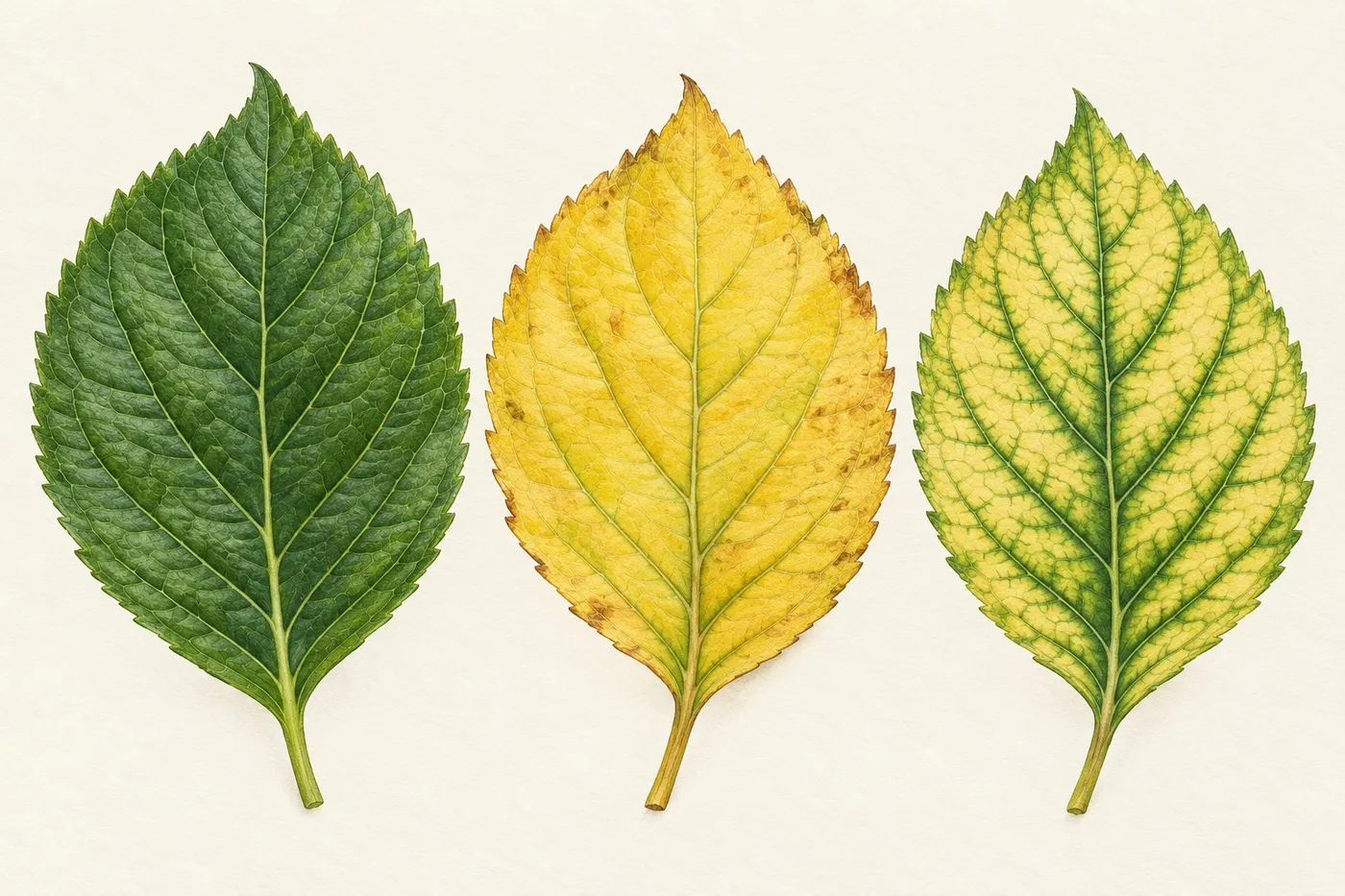
The pattern tells you the cause. Oldest, lowest leaves yellowing first usually means overwatering or nitrogen hunger, so check soil moisture before you fertilize. Yellow new leaves with green veins is iron chlorosis, almost always caused by soil pH above about 7 rather than a lack of iron. Spots, streaks or crispy edges point to disease, insects or scorch.
Yellow leaves are your plant's way of talking — and the pattern of the yellowing tells you what it's saying.
Whole plant yellowing, starting with the oldest, lowest leaves
Usually nitrogen hunger or overwatering. Nitrogen is mobile, so a hungry plant robs its old leaves to feed new growth. Soggy roots cause the same look because drowned roots can't take up nutrients at all. Check moisture first: if the soil is wet, back off the water before you reach for fertilizer.
Yellow new leaves with green veins
That netted pattern — yellow leaf, green veins, worst on the newest growth — is classic iron deficiency, called interveinal chlorosis. And here's the catch: it's rarely a lack of iron in the soil. It's almost always pH. Above a pH of about 7, iron locks up where roots can't grab it. A chelated iron product gives quick cosmetic relief, but the lasting fix is bringing pH down (see our soil pH guide).
Yellowing with spots, streaks, or crispy edges
Now you're likely looking at disease, insect feeding, or scorch rather than nutrition. Snap a photo — or better, bring a leaf in a zip-top bag to the greenhouse — and we'll help you figure it out.
Common questions
Should I fertilize a plant with yellow leaves?
Not until you’ve checked the soil. If it’s wet, the roots are drowning and can’t take up nutrients; let it dry out first. If the soil is fine and the oldest leaves are yellowing, the plant is probably hungry and a feeding helps.
Why are my leaves yellow with green veins?
That’s interveinal chlorosis, usually iron that’s locked up by soil pH above about 7. Chelated iron gives quick cosmetic relief, but the lasting fix is bringing the pH down. Test the soil first; our soil pH guide covers how.
Why do river birch leaves turn yellow?
River birch and certain oaks are the classic chlorosis victims in the alkaline pockets around here. If a tree yellows year after year, test the soil before you treat the tree.
Can you help figure out what’s wrong with my plant?
Yes. Bring a few leaves in a zip-top bag to the greenhouse, or a clear photo, and we’ll help you figure it out.