
Perennials & Shrubs
Is it too late to plant perennials this fall?
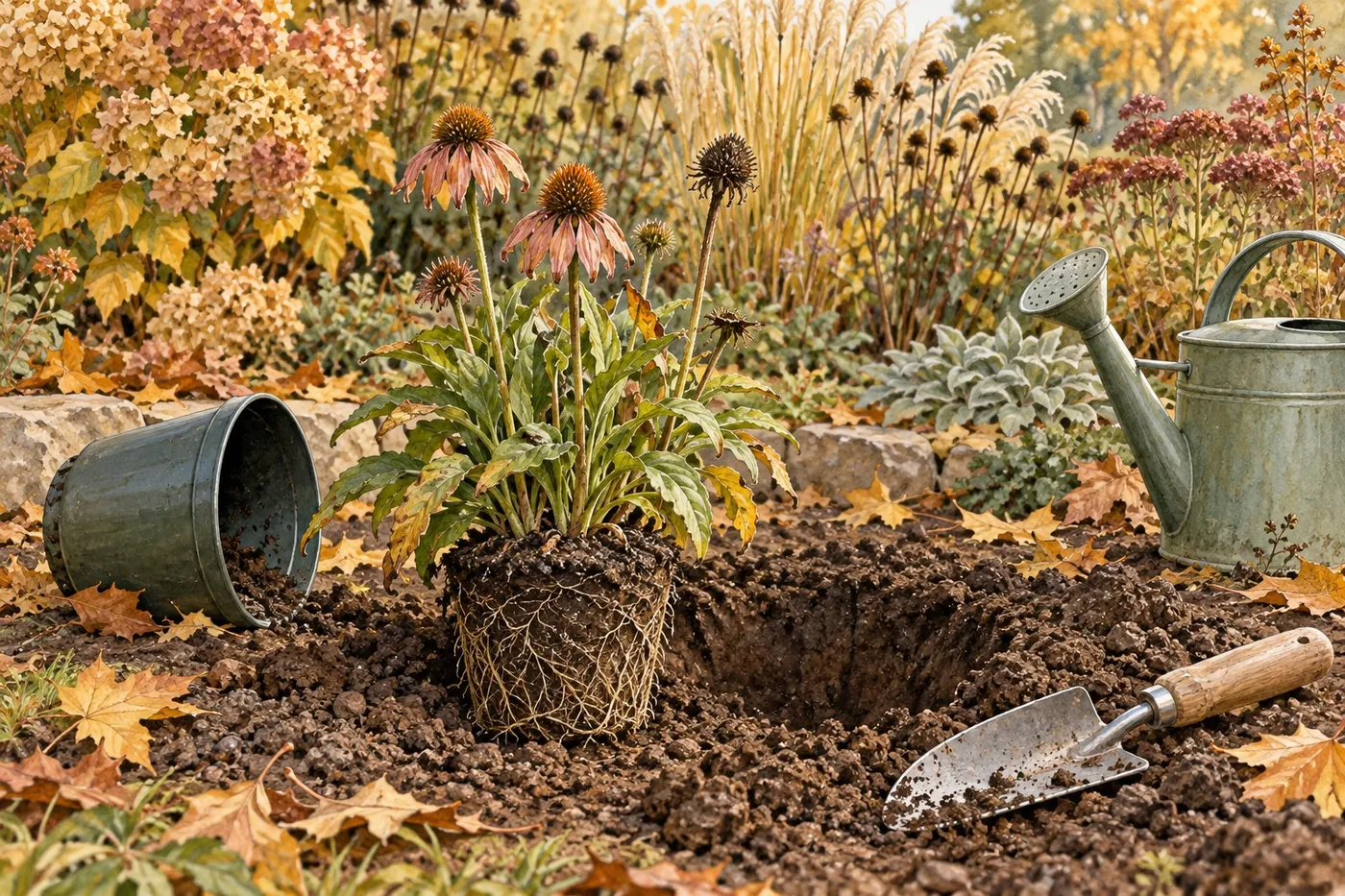
The short answer: through mid-October is ideal, and potted perennials can go in right up until the ground freezes if you water them in and mulch them after the freeze. Fall is a good time to plant. The soil is still warm, the air is cool, and the plant puts its energy into roots instead of flowers.
The six-week rule
Perennials want about six weeks of root growth before the ground freezes hard. Around East Bethel, the soil usually locks up in mid to late November, so September through mid-October is the comfortable window. The roots keep growing as long as the soil is above about 40°F, even after the leaves have been frosted.
After mid-October it's a gamble, but a good one for tough, hardy plants in pots. The bigger risk isn't cold; it's frost heave. When the soil freezes and thaws over and over, a young plant with a small root ball gets pushed right up out of the ground and its roots dry out.
Good choices for fall planting
Tough, fibrous-rooted perennials that are fully hardy to zone 3 or 4 handle fall planting best: coneflowers, black-eyed Susans, catmint, daylilies, hostas, sedum, yarrow, ornamental grasses and most natives. Peonies are best planted or moved in September (see our dividing guide).
Hold these for spring
- Borderline-hardy plants rated zone 5 or warmer. Give them a full season to settle in before their first winter.
- Plants that dislike wet feet in winter, like lavender, Russian sage, butterfly bush and some penstemons. In cold, wet fall soil they rot more often than they freeze.
- Mums. Mums planted after early September often don't come back (more in will my mums come back?).
How to plant in fall
- Water the pot well an hour before planting, and loosen any circling roots.
- Set the plant at the same depth it was in the pot, no deeper.
- Water deeply right away, then every few days until the ground freezes if it's dry. Fall droughts are common, and dry roots freeze much harder than moist ones.
- Skip the fertilizer. You don't want soft new top growth going into winter.
- After the ground freezes, usually around Thanksgiving, cover the crown with 3–4″ of straw or shredded leaves. That keeps the soil frozen instead of thawing and heaving. Pull it back in April.