
Vegetable timing
When to plant vegetables in Minnesota
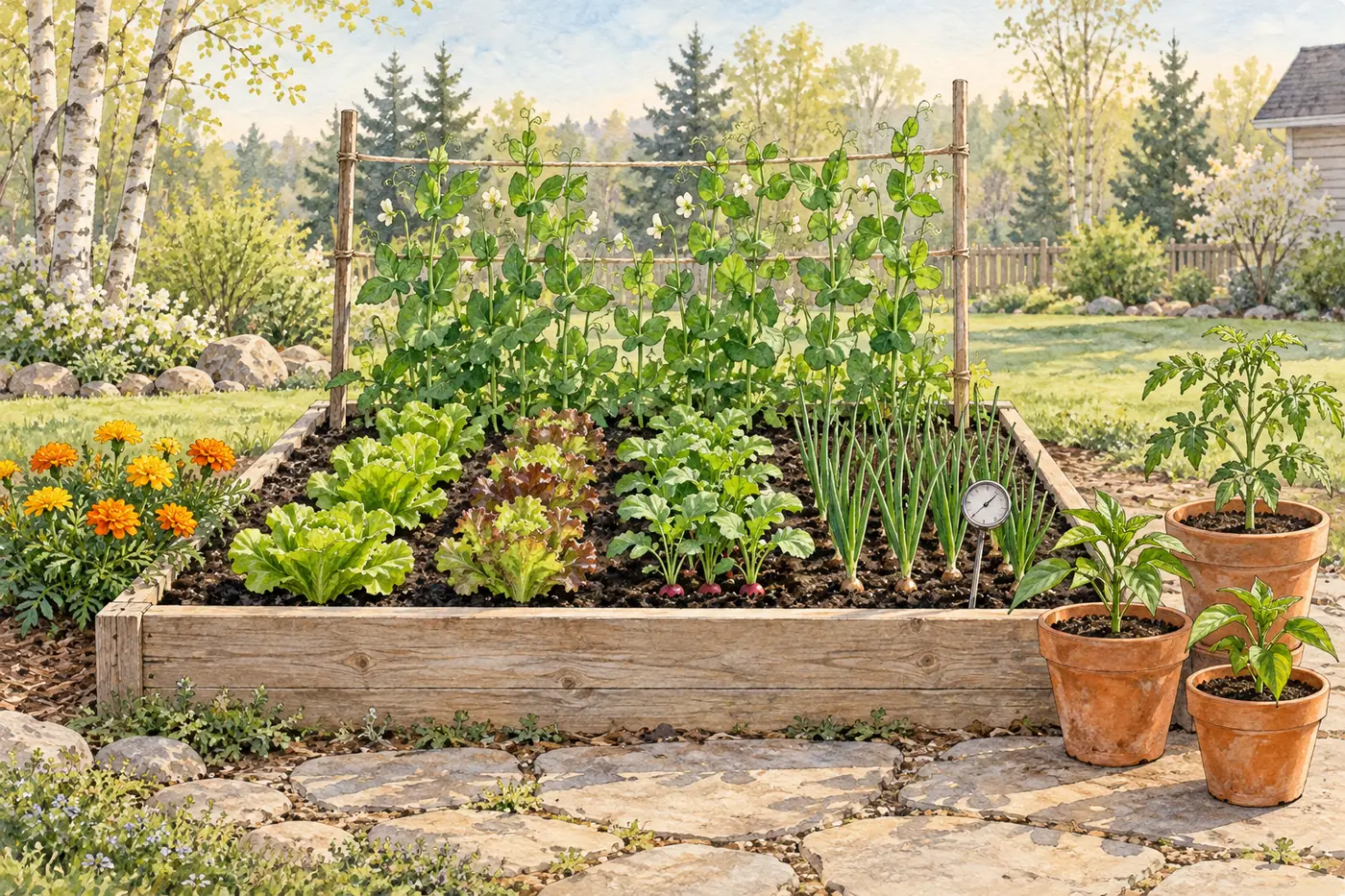
Cool-season crops — peas, spinach, lettuce, radishes, onions, potatoes, broccoli and cabbage — go in from mid-April to early May, as soon as the soil is workable. Warm-season crops — tomatoes, peppers, squash, cucumbers, beans, sweet corn and melons — wait for mid-May to early June, after the last frost and once the soil has warmed. Around East Bethel, Memorial Day weekend is the safe bet for the tender stuff.
Minnesota gives you about five months between the last spring freeze and the first fall one, so timing matters more here than almost anywhere. Plant too early and a cold night sets you back weeks; plant too late and the melons run out of summer. Here’s the schedule we follow on our own benches and in our own gardens.
Frost dates for the north metro
Cambridge is the official weather station closest to East Bethel. Based on the Minnesota DNR’s 1991–2020 records, its last spring freeze (32°F) comes about May 2 in an average year — but in one year out of ten it freezes after May 20. The first fall freeze averages October 4, and one year in ten it comes by September 20. That works out to roughly 150 frost-free days.
Closer to the cities it’s a little warmer: at the Minneapolis–St. Paul airport the average last freeze is April 23. If you garden in Blaine, Andover, Ham Lake or farther north, use the Cambridge numbers, not the airport’s.
Go by soil temperature, not just the calendar
University of Minnesota Extension says soil temperature is the best guide to when to plant. A $10 soil thermometer pushed about 4 inches deep tells you more than the calendar does:
| Soil temperature | What to plant | Usually |
|---|---|---|
| 40–50°F | What to plantPeas, spinach, lettuce, radishes, onions, potatoes, carrots, beets | UsuallyMid-April to early May |
| 50–60°F | What to plantBeans, sweet corn, cucumbers, broccoli and cabbage transplants | UsuallyMid to late May |
| 60–65°F and up | What to plantTomatoes, peppers, eggplant, squash, pumpkins, melons | UsuallyLate May to early June |
The planting calendar, crop by crop
| Crop | Plant outside | Seed or transplant | Good to know |
|---|---|---|---|
| Spinach, lettuce | Plant outsideMid-April | Seed or transplantSeed or transplant | Good to knowSow again in early August for a fall crop |
| Peas | Plant outsideMid-April to early May | Seed or transplantSeed | Good to knowShrugs off a light frost |
| Radishes | Plant outsideMid-April to mid-May | Seed or transplantSeed | Good to knowSow a short row every two weeks |
| Onions | Plant outsideMid-April | Seed or transplantSets or transplants | Good to know |
| Potatoes | Plant outsideLate April to mid-May | Seed or transplantSeed potatoes | Good to know |
| Carrots, beets | Plant outsideLate April to early June | Seed or transplantSeed | Good to knowSow again in mid-July for fall |
| Broccoli, cabbage, cauliflower | Plant outsideLate April to mid-May | Seed or transplantTransplants | Good to knowHarden off first; another round in early June for fall |
| Cucumbers | Plant outsideMid-May to early June | Seed or transplantSeed or transplant | Good to knowWait for warm soil |
| Beans | Plant outsideMid-May to early July | Seed or transplantSeed | Good to knowPlant again every few weeks for a steady supply |
| Sweet corn | Plant outsideMid-May to mid-June | Seed or transplantSeed | Good to knowPlant in a block, not one long row, so it pollinates |
| Tomatoes | Plant outsideLate May to early June | Seed or transplantTransplants | Good to knowNights above 50°F |
| Peppers, eggplant | Plant outsideEarly June | Seed or transplantTransplants | Good to knowThe fussiest about cold |
| Squash, pumpkins | Plant outsideLate May to early June | Seed or transplantSeed or transplant | Good to know |
| Melons, watermelon | Plant outsideLate May to early June | Seed or transplantTransplants | Good to knowWant the warmest spot you have |
| Garlic | Plant outsideOctober | Seed or transplantCloves | Good to know1–2 weeks after the first killing frost; mulch 3–4 inches |
Planting windows from University of Minnesota Extension’s planting guide and home garden calendar, adjusted for the north metro.
Don’t forget the fall garden
Minnesota’s second planting season is midsummer. In mid-July, sow carrots, beets and broccoli for fall; through early to mid-August, sow spinach, lettuce, radishes, kohlrabi and turnips. Kale keeps going until temperatures drop to about 20°F, so it’s often the last thing picked.
Vegetable starts we grow
Every vegetable start on our benches is grown chemical-free here in East Bethel. Tap through for the varieties:
Common questions
When can I plant tomatoes in Minnesota?
Around East Bethel, tomatoes go in the ground between about May 25 and June 1, once frost danger has passed, nights stay above 50°F and the soil has warmed to about 60°F. Our tomato guide has the details.
What vegetables can I plant in April in Minnesota?
As soon as the soil can be worked and reaches about 40–50°F (usually mid to late April), plant peas, spinach, lettuce, radishes, onions and potatoes, plus hardened-off broccoli and cabbage transplants. They all handle a light frost.
When is the last frost in Minnesota?
It depends on where you are. At Cambridge, the official weather station closest to East Bethel, the average last 32°F night is about May 2, but one year in ten it freezes after May 20 (Minnesota DNR, 1991–2020 normals). That's why we wait until mid-to-late May for tender crops.