
Minnesota & Seasons
Starting seeds indoors: when to start and what you need
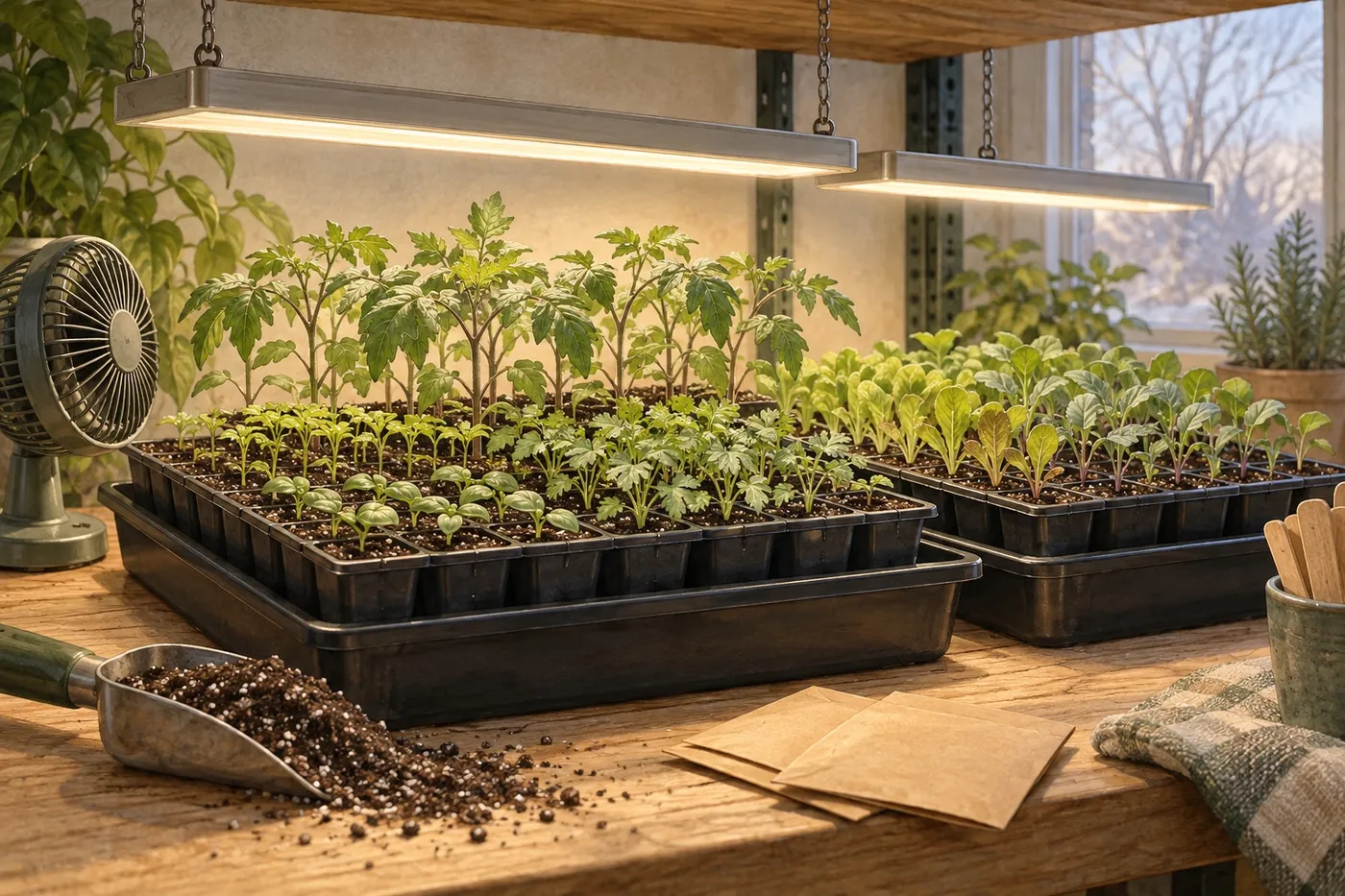
The short answer: count back from your last frost date, which is mid-May around East Bethel, and give seedlings a strong light only a few inches above them. Most seed-starting problems come from starting too early or giving seedlings too little light.
When to start: a Minnesota calendar
These dates assume planting out around Memorial Day:
- Late February to early March: onions, leeks, and slow perennials like lavender (10–12 weeks ahead).
- Mid-March: peppers and eggplant (8–10 weeks). They're slow and like warm soil to sprout.
- Late March to early April: tomatoes (6–8 weeks), plus cabbage, broccoli and kale to plant out in early May.
- Mid-April: basil and most fast annual flowers like zinnias and marigolds (4–6 weeks).
- Late April to early May: cucumbers, squash and melons (3–4 weeks), or sow them straight in the garden in late May.
Want exact dates? Our seed-starting calendar works them out for 42 vegetables, herbs and flowers from your own last-frost date, and prints.
Starting earlier than this doesn't give you bigger plants; it gives you root-bound, leggy ones that stall when they're planted out.
Light is everything
A sunny Minnesota window in March isn't enough; seedlings stretch toward it and flop over. Use grow lights or ordinary LED shop lights, hung 2–4″ above the seedlings and raised as they grow. Run them 14–16 hours a day on a cheap outlet timer. If seedlings are tall, pale and leaning, the light is too far away or too weak.
Mix, warmth and water
- Use seed-starting mix, not garden soil or regular potting mix. It's fine, sterile and drains well (our potting mix guide explains why garden soil fails in pots).
- Heat helps germination. Peppers, tomatoes and eggplant sprout much faster on a seedling heat mat at 75–80°F. Take them off once they're up.
- Water from the bottom by setting the tray in water for 20 minutes, and let the surface dry between waterings.
- Run a small fan on low for a few hours a day. The air movement prevents disease and makes the stems sturdier.
Damping off
Healthy seedlings that suddenly pinch at the soil line and fall over have damping off, a fungal disease. It thrives in cold, soggy, still conditions. Prevent it with sterile mix, clean trays, bottom watering, and air movement. Once a seedling collapses it can't be saved, so start a few extra.
Before they go outside
Seedlings raised indoors have to be hardened off for about a week before planting. Skip that step and a month of careful work can get sunburned in an afternoon.
↑ Back to all guides