
Minnesota & Seasons
Planting spring bulbs in Minnesota
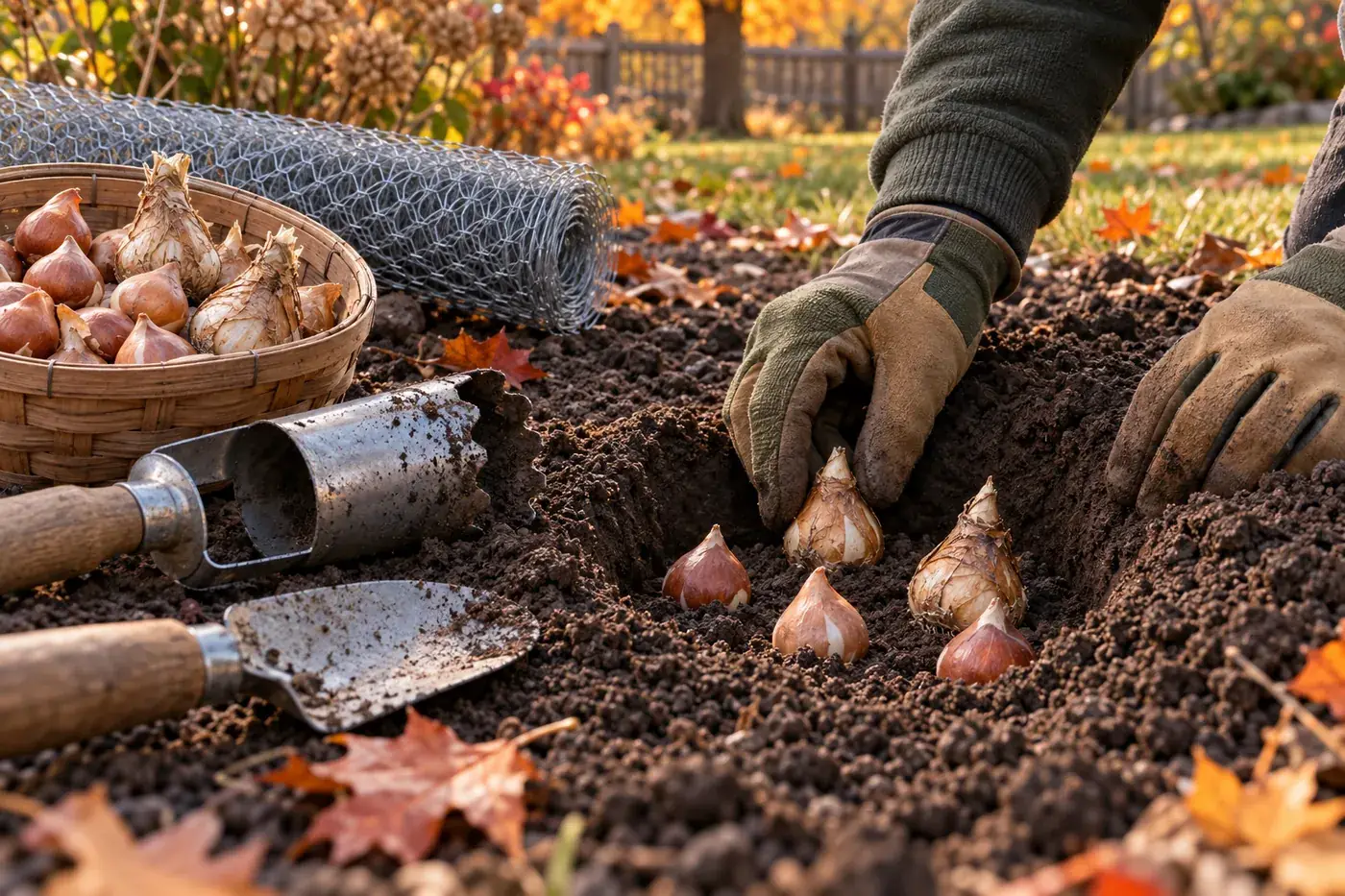
The short answer: plant spring bulbs from mid-September through October, about three times as deep as the bulb is tall, pointy end up, in a spot that drains well. They need a long cold winter in the ground to bloom, which is one thing Minnesota provides in abundance.
When to plant
Once the soil cools in fall, usually mid-September on, and any time before the ground freezes. Earlier is a little better, because bulbs grow roots in fall and the more they grow before winter, the stronger they come up. But bulbs planted in early November, if you can still dig, will usually bloom just fine. A bag of bulbs left in the garage over winter will not.
How deep
The rule is three times the height of the bulb, measured to the bottom of the hole:
- Tulips, daffodils and large alliums: 6–8″ deep. In our cold winters, going toward the deeper end helps tulips come back.
- Hyacinths: about 6″.
- Crocus, grape hyacinth, squill, glory-of-the-snow and small alliums: 3–4″.
Pointy end up, roots down. If you can't tell which end is which, plant it on its side; it'll sort itself out.
Where and how
- Drainage matters most. Bulbs rot in soggy spots. Avoid low areas where water stands in spring.
- Full sun to part shade. Under deciduous trees is fine, since bulbs bloom before the trees leaf out.
- Plant in groups, not single file. Five to ten tulips or daffodils in a clump, or a few dozen small bulbs in a drift, look far better than a line along the walk.
- Water them in after planting, and in any dry week after that until the ground freezes.
- Once the ground freezes, a few inches of shredded leaves or straw over the planting helps in exposed spots.
Squirrels, rabbits and deer
Tulips and crocus are a buffet. Daffodils, alliums, grape hyacinth and squill are left alone, because they're unpleasant or toxic to animals.
- For tulips and crocus, lay a piece of chicken wire flat over the planted area, just under the soil or mulch. Shoots grow through it in spring; squirrels can't dig through it.
- Clean up the papery bulb skins and fill the holes completely. Loose, fresh-dug soil is what draws squirrels in the first place.
- Where deer or rabbits are a problem, lean on daffodils and alliums.
Will they come back?
Daffodils, alliums, grape hyacinth, squill and crocus come back and spread for years. Tulips are less reliable; many fade after the first couple of springs. Darwin hybrid and species (“botanical”) tulips last the longest. Whatever you plant, let the leaves stay until they turn yellow in early summer. That's when the bulb is storing up energy to bloom next year, so don't cut, braid or mow them early.
Common questions
When should I plant tulip and daffodil bulbs in Minnesota?
From mid-September through October, once the soil has cooled down, and any time before the ground freezes. Bulbs planted in early fall have more time to grow roots before winter, but bulbs planted as late as early November usually still bloom fine if the ground isn't frozen yet.
How deep do I plant bulbs?
About three times as deep as the bulb is tall, measured to the bottom of the bulb. That's roughly 6 to 8 inches for tulips, daffodils and large alliums, and 3 to 4 inches for small bulbs such as crocus, grape hyacinth and squill. Plant with the pointed end up.
↑ Back to all guides