
Little worlds
How to plant a fairy garden (that lasts all summer)
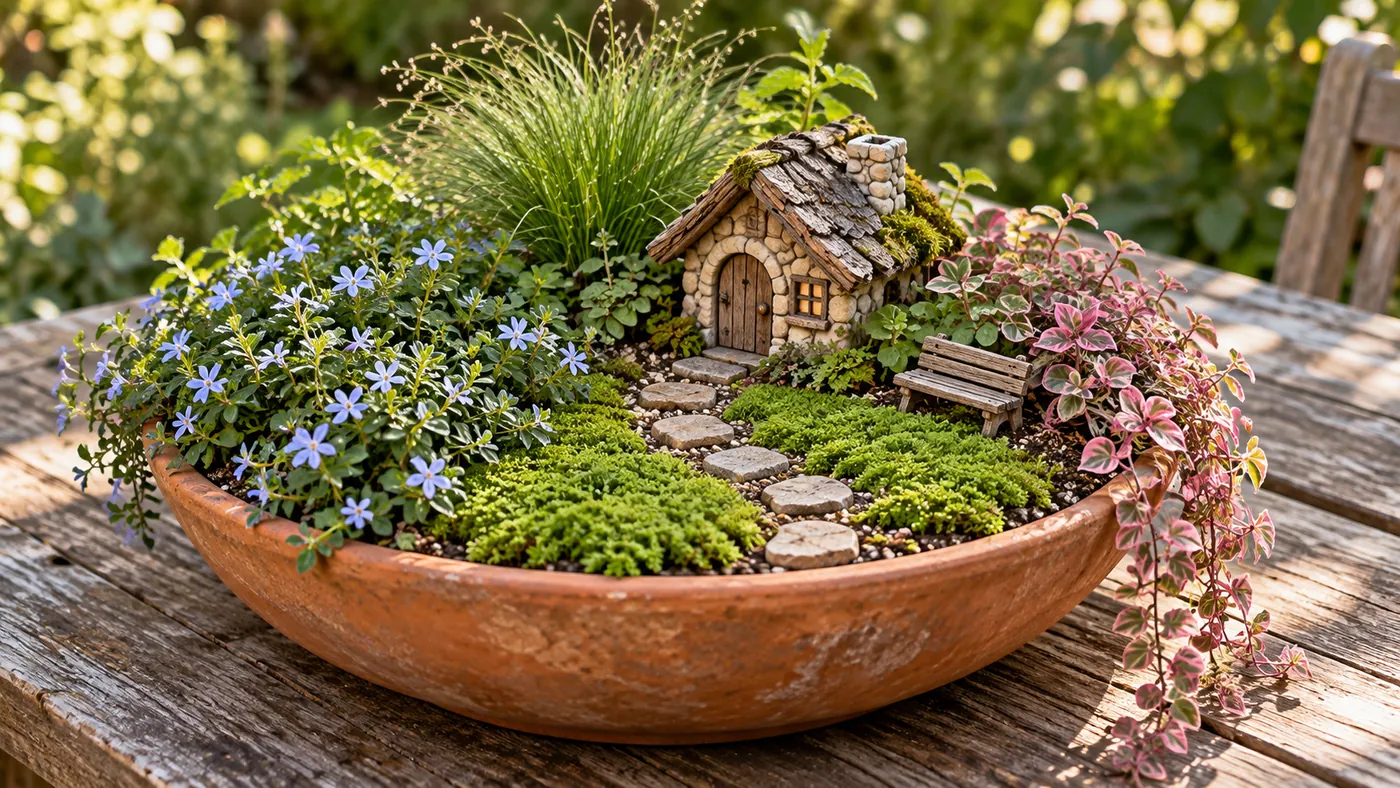
A fairy garden is a whole landscape shrunk into one pot — a mossy lawn, a stepping-stone path, a tiny house tucked under a “tree.” It is the project kids remember, and it is easier than it looks. The trick is picking plants that stay small, want the same light and the same water, and then mostly leaving them alone.
Step 1: A pot that drains
Go wide and shallow: a bowl, an old wagon, a cracked terracotta saucer, a wooden crate. Whatever you choose, it needs holes in the bottom — a fairy garden without drainage turns sour fast. Fill it with a bagged potting mix, not soil from the yard; garden soil packs down hard in a pot and can bring disease with it. (Our potting mix guide explains why.)
Step 2: Plants that match
Choose plants that like the same amount of sun and water, and favor small-leaved, slow-growing ones so the scene stays in scale. These are the ones we grow for exactly this job, in 4.5″ pots:
- Irish Moss — the lawn. A soft green carpet about 2″ tall that creeps out to 10″. Likes cool, moist, well-drained soil and a little midday shade. It is the one fairy plant that is winter-hardy here (zone 4).
- Blue Star Creeper — a lawn that blooms. Barely 1–2″ tall and covered in tiny pale-blue stars. Sun or part shade, evenly moist soil.
- Fiber Optic Grass — the fountain. Fine green threads with tiny tips, 10–14″ tall; perfect next to a little pond or as the tallest “tree.” Keep it moist.
- Pink Lady Callisia — the trailer. Small pink-and-green leaves that spill over the rim. Bright light keeps the pink color; pinch it back to keep it fairy-sized.
- Sensitive Plant — the magic trick. Its leaves fold shut when you touch them, which is the whole point for a seven-year-old.
See them all on our fairy garden plants page.
Step 3: Build the scene
Set the “hardscape” first — house, path, bench, pebble creek — then plant around it. Put the tallest plant (fiber optic grass) toward the back, the trailer at the edge so it can spill, and fill the open ground with moss or blue star creeper. Leave a little room: these plants will fill in over the first few weeks.
Keeping it happy
Water: check with a finger and water when the top inch of soil feels dry — small pots dry out faster than you’d think in July, but soggy soil rots moss. Light: a spot with morning sun and afternoon shade suits most fairy plants; full afternoon sun will scorch moss. Trimming: snip anything that outgrows the scene — the trimmings of callisia root easily in water.
In the fall
Irish Moss can stay outside and come back next spring. The others are tender: bring the whole pot in to a bright window before frost, or treat them as annuals and start fresh in May.